Hey, remember back in 2023, when Elon was trying to push Twitter Blue sign-ups (which has since become X Premium) shortly after buying the platform, and he noted that, in his view, paid social media will eventually be “the only social media that matters”?
Musk’s comments related to his bot-battling efforts, and the idea that getting real humans to pay to use an app is the only way to eliminate the bot problem, which is only going to get worse in the age of AI.
Musk suggested that a small payment amount would price bot peddlers out of the market, and would make it impossible for bot scammers to create swarms of fake accounts.
And while X Premium take-up hasn’t been massive, and is now, reportedly, up to around 1.5 million users (X doesn’t provide official data on this), it is interesting to note the broader shift towards paid social more broadly, with several platforms now looking to drive more paid take-up, both as an additional revenue stream, and maybe as an anti-bot measure.
So was Elon right? And as more platforms consider broader paid add-on options, are we headed towards an era where paid social becomes the norm?
To be clear, every social platform still makes way more money from advertising than they do from subscriptions, and the fact that they’re free to all users is the reason why they’re so valuable in this respect, in terms of reach.
As such, I highly doubt that any social platform can afford to go all paid, but it is interesting to note the gradual growth of paid subscription tools, and the broader change in approach on this front.
Right now:
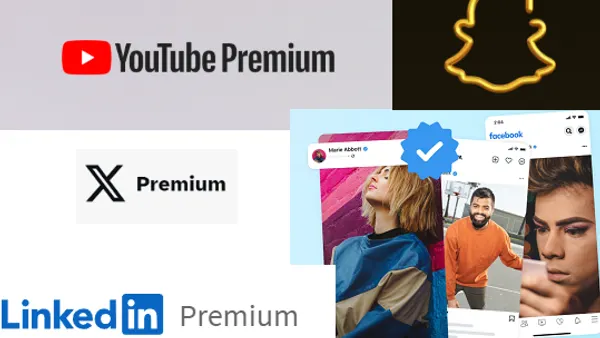
- Meta offers Meta Verified, which is a paid add-on option for creators and businesses that gives you a verified checkmark on Facebook, Instagram and Threads, and provides impersonation protection, among other variable features
- Snapchat has Snapchat+, which also offers in-app markers to signify membership, along with access to a range of exclusive add-on features
- LinkedIn Premium includes a range of helpful features, mostly geared towards job seekers, creators and businesses, and LinkedIn has been steadily expanding its Premium offerings of late.
- YouTube Premium’s main lure is ad-free viewing, but it’s also been expanding its offering with a range of add-on features.
These, along with X Premium, are the main social add-on features at present, and all of them, as noted, have undergone significant expansion, and become a bigger focus for each platform over the past 12 months.
And they’re set to get even more relevant, with YouTube looking to move more features behind a paywall (like variable playback speed), and Instagram considering a Snapchat+ style offering aimed at younger users.
Do these moves suggest a broader push towards paid social, as Elon predicted, and is this becoming a more accepted, logical pathway for users, which could eventually gate more and more features?
I do think that most AI tools will need to look to paid subscription offerings in order to ensure financial viability, and that could have a broader impact on this element, as it normalizes payment for platform services.
Maybe, then, that will open the door for social apps to also charge for access, especially for add-on elements. But again, given that the main value proposition of these apps is in advertising, the incentive remains too high to maximize usage, as opposed to driving more direct profit.
And if platforms did switch to a fully paid model, people would just switch to free apps instead. As such, I don’t think they’ll ever be able to make every user pay, as Elon had projected, though I do see his logic, and I understand his own push to make X users pay for the app, thus reducing its reliance on ads.
Either way, it is interesting to note the changes in approach to paid social, and how the concept is evolving.
Maybe, as more new features get locked to non-paying users, this will become a bigger thing, and that could lead to a different approach, in various ways.