Meta is reportedly looking to get into prediction markets. The New York Times reported on Tuesday that Meta CEO Mark Zuckerberg has tasked a new team with the development of a prediction markets app.
Prediction markets have become big business of late, with platforms including Polymarket and Kalshi enabling users to place bets on all sorts of occurrences and events.
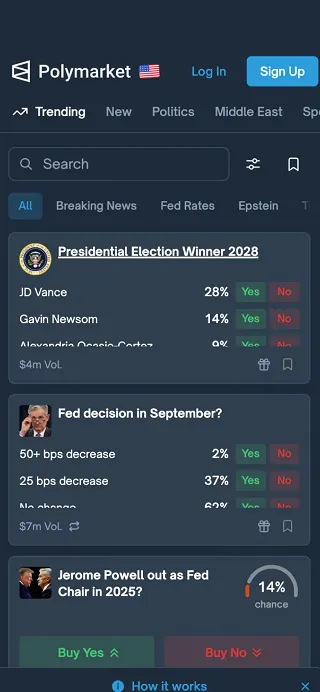
Now, Meta is looking to tap into the same, in order to prop up engagement in its apps and add another element to its broader user experience.
As per NYT: “Mr. Zuckerberg, the chief executive of Meta, recently dispatched a small team at his company to create a smartphone app similar to Polymarket and Kalshi, two employees with knowledge of the matter said. Users would not wager money, and the app would probably rely on a video game-like points system instead, one person said, though the company had not ruled out the eventual use of real money betting.”
According to NYT, Meta’s experimental app is being internally referred to as Arena. It would function independently from Meta’s other apps, and the company would grow the app by leveraging its massive audience reach.
That’s worked for Threads, Meta’s Twitter alternative platform, which is now up to 500 million users. As such, maybe Meta sees a framework for expanding its empire into more elements, tapping into the popularity of futures activity, in order to fuel more ad opportunities.
Though it could also be a risk.
Prediction markets have become a source of contention, with U.S. regulators exploring new rules in order to combat manipulation.
This comes after several questionable cases in which large payouts were secured, seemingly based on insider information, which has prompted calls for more consumer protections, similar to gambling rules.
As reported by The Wall Street Journal, the Commodity Futures Trading Commission is currently preparing new regulations that would give it more control over making bets on elements that are considered to be not in the public interest, or that could be highly susceptible to manipulation.
Thus far, prediction market operators have argued that they are not gambling operators. Instead, they label their offerings as event derivatives, and say those should be overseen at a federal level by the CFTC. U.S. President Donald Trump recently affirmed that, in his view, this element should remain within the remit of the CTFC.
Given this political wrangling, it seems a little risky for Meta to be wading into this territory, even if the company plans to stay away from the more direct crypto and financial betting elements.
But maybe Meta sees this as more of a pure engagement play, with users able to win points that can then be used within Meta’s apps, or on Meta’s products, in order to boost broader engagement.
Zuckerberg’s improving relationship with President Trump might also provide a fertile environment to make moves into areas like this, because that goodwill might allow Meta to avoid additional scrutiny from federal agencies.