Meta has launched the next stage of its agentic artificial intelligence push, with new Muse Wonder models that expand on the capacity of its existing Muse system by providing more processing power for advanced tasks.
As explained by Meta: “Today, we’re excited to introduce the Muse Wonder series with Muse Wonder and Muse Wonder Full, our most capable models that deliver state-of-the-art performance on personal and professional agentic tasks. … Muse Wonder brings together Active Memory and Active Focus to keep track of what matters to you and work diligently toward what you want to accomplish.”
The new system essentially provides a more beefed-up version of its existing Muse AI, enabling it to undertake longer and more complex tasks, including those that take days to complete.
Meta said that its updated system is already achieving new high benchmark results in key AI competency tests.
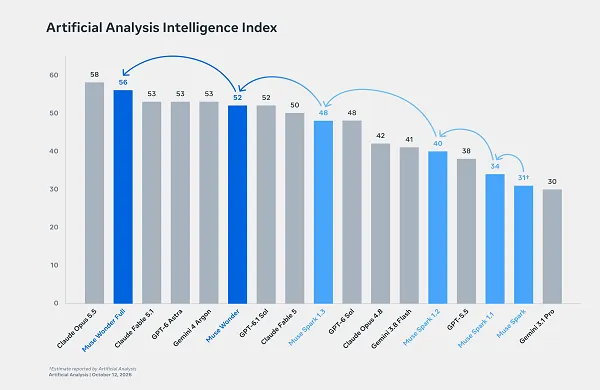
So what does that mean for users?
Well, for one thing Meta’s Muse AI agents are about to get more powerful, with more capacity to undertake potential projects.
As per Meta: “Muse Wonder and Muse Wonder Full apply specialized knowledge to problems people encounter at work and in daily life, from understanding a lease to making sense of financial or health information. Our evaluations include tasks in law, finance, and health that test this ability.”
Of course, that would mean that users would need to trust Muse with their financial or health information, which remains a major point of contention and concern.
That’s because AI tools continue to go beyond their instructions and undertake tasks that could even put human users at risk. For example, AI agents could be empowered to negotiate a sale on Facebook Marketplace and invite a stranger to a user’s home address for pickup.
As reported by Extreme Tech, this recently happened to a Muse user in Toronto, who empowered his Muse agent to undertake the full Marketplace sales process on his behalf, but was unaware that in doing so, it meant that the system would sell his item and give out his address.
Which is a human error, not a system one. But even so, the concern here is that with this capacity being so easy to switch on, many Muse users are going to make similar mistakes and unwittingly empower their Muse agents to undertake tasks that could end up having various harmful impacts.
Then there’s Meta’s long track record of misusing people’s data and facilitating data exploits and hacks.
Meta has improved its systems on this front significantly over time, and it’s working hard to ensure that Muse users are aware that their personal information is safe.
But even so, allowing automated agents to access expanded personal info and undertake tasks based on that feels risky. It also seems like these AI agents may need a longer testing period before users can be assured they’re as safe and as valuable as Meta suggests.
Maybe Meta’s Muse Wonder expansion can help with this. Meta said that the new system can undertake many more tasks with higher accuracy and improved delivery.