Meta has taken the next step in its grand plan to bring artificial intelligence-enabled superintelligence to everyone, with the launch of Muse, a new app and in-stream chatbot that can not only provide suggestions based on conversational queries, but can also undertake tasks on the user’s behalf.
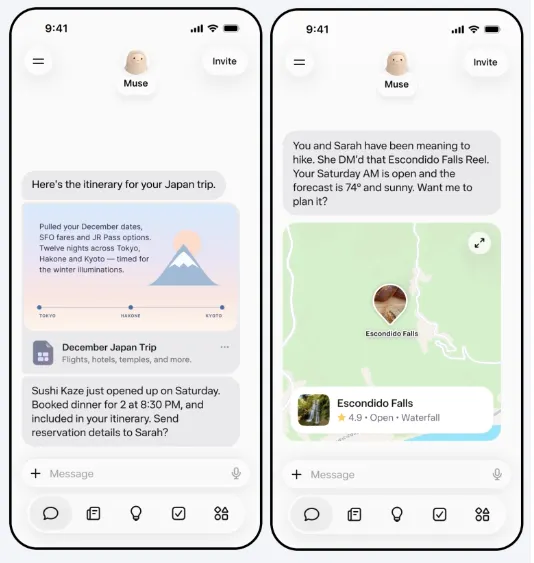
Users will be able to name their Muse agent, which will also be connected to their Facebook and Instagram profiles for expanded context. Muse will then be able to offer guidance and assistance with a range of tasks, such as planning a trip or booking tickets.
What’s more, Muse will be able to facilitate purchases in-stream.
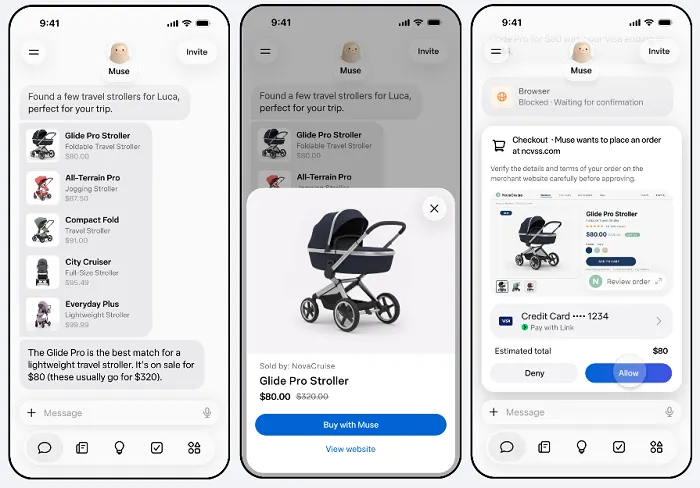
Though as SMT has previously noted, this could be a major point of contention for Meta’s agentic AI push because it will require people to feed even more of their personal info into a Meta-owned tool.
But Meta’s announcement seeks to reassure users on this point, by repeatedly noting that Muse is designed to be secure and private, and that users won’t be asked to grant the tool access to more of their data.
As per Meta: “Muse runs on Muse Secure VM, a dedicated, virtual machine (VM) that houses both the agent and a person’s data. Muse is designed around the way people already communicate, so talking to it works just like messaging another person, in the Muse app or directly in WhatsApp.”
This new data separation element was designed with input from Signal co-founder Moxie Marlinspike, who also played a part in designing the encryption system for WhatsApp. Meta hopes that going the extra mile in the development of this process will reassure users who may be hesitant about sharing expanded personal insights to power the Muse system.
“[Muse] can handle tasks, like sending an email or booking travel, and it can take on big audacious goals,” Meta said. “Once a person shares a goal with Muse, it helps them develop a personalized plan and coordinate their time and resources, then advances the work on its own. It can open a browser, fill out forms, and negotiate on their behalf.”
There’s a range of ways that such a system could be put to work. However, there may also be limitations to how people will make use of this functionality, since they may not know where to begin.
In order to address this, Meta is also developing an ideas library based on how people are using the app. This feature will suggest ideas for potential functions that Muse can undertake for users with similar interests or needs.

Meta CEO Mark Zuckerberg outlined this aspect in an interview with Sources.
As per Zuckerberg: “One of the big issues that I think exists with AI is a lot of people don't know what to do with it. So I think if the agent can itself help you suggest things that it can do to be helpful for you, then that solves a huge part of this problem of making it so that you can get the most out of it.”
Zuckerberg said that Muse agents will eventually learn from other agents in the fleet, which will expand the range of pre-set tasks and options for users.
Muse could be worth testing, and Zuckerberg said that Muse can be connected to Meta ads accounts as well, in order to provide guidance on marketing approaches across the company’s apps.
Muse is available for free, with access to 100 million tokens per week, which will provide users with significant capacity to test the system.