In a new best practices guide, Meta said advertisers can maximize their ad campaign results this holiday season by ensuring that each campaign is clearly aligned with their business goals and has enough run time to demonstrate relevant results.
This could be important, because according to Meta, 42% of shoppers said they planned to spend less during last year’s holiday shopping season, yet actually spent 4.2% more year over year.
In order to maximize campaign performance this year, Meta said clarity is critical when it comes to setting up a campaign brief.
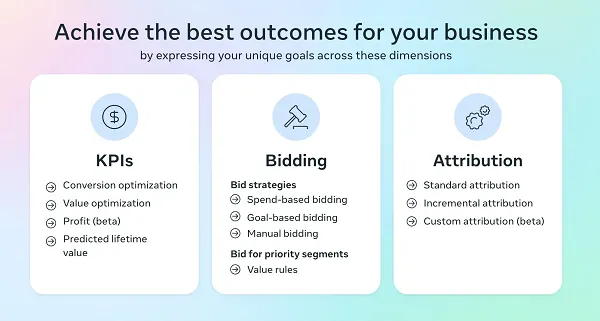
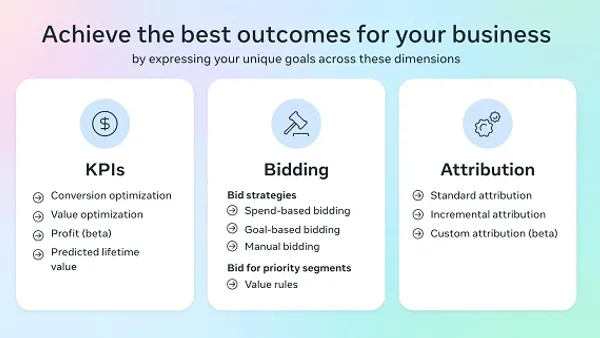
As per Meta: “Every campaign you set up is a brief. The optimization event is the ask. The budget is the constraint. The bid strategy is the definition of success. The attribution setting is how you agree to be judged. If you were briefing a person, you would want to be very specific. Do the same with our auction.”
According to Meta, many advertisers react to fluctuations in performance too early, which gives the ad system less time to understand optimal targeting, and leads to confusing results.
Meta’s advice is that once marketers establish clear goals in their initial ad set-up, they should give each campaign enough time to empower systematic understanding.
“Give each ad set enough volume to learn from,” Meta said. “Roughly fifty conversions a week. Below that the system is guessing. In our analysis, ad sets under that threshold ran about 28% more expensive per purchase.”
Meta said advertisers should then review campaign results against key intended outcomes.
Meta added that A/B testing or Conversion Lift studies can provide more clarity on ad performance. But without that initial clarity and enough data to provide an assessment, tweaking elements of a campaign is merely guesswork.
“Peak season doesn’t reward the advertiser who watches the dashboard most closely,” Meta said. “It rewards the one who wrote the clearest instruction and then had the nerve to leave it alone.”
This approach requires advertisers to place their trust in Meta’s systems, and to not be as reactive when assessing ongoing results that may be costing them money.
But Meta’s advice is that campaign insights can only be gleaned through data, and both the system and advertisers need enough data to accurately attribute flaws.