TikTok USDS, the platform’s U.S.-based management group, shared its latest data on rule enforcement and removals, covering the period between April 1 and June 30..
This is the second Platform Security and Community Guidelines Report for the U.S. TikTok team, which took over TikTok’s American operations in January.
The first report, covering Q1, was published in July. Looking at the two reports together provides a comparison in activity and helps to better measure the scope of TikTok’s evolving efforts.
First, TikTok said it removed 14.6 million fake accounts within the period, and prevented another 64.8 million spam accounts from being created. The platform also said that it removed 781.4 million fake followers and prevented 403.2 million fake follow requests.
That’s a significant increase over its previously reported removal activity.
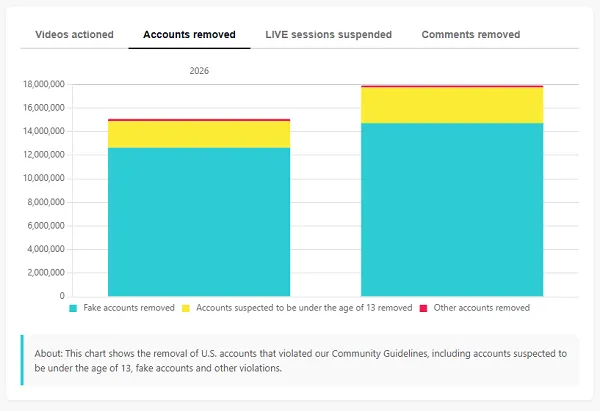
That would suggest that either TikTok is becoming a bigger focus for spammers and scammers, or that the platform’s detection systems are improving. Either way, the end result is that more fake accounts are being removed from the app.
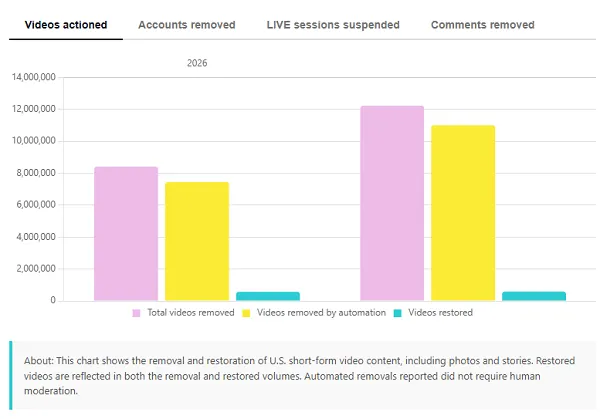
The trend was similar in terms of video removals, with far more videos being taken down for rule violations in this most recent period.
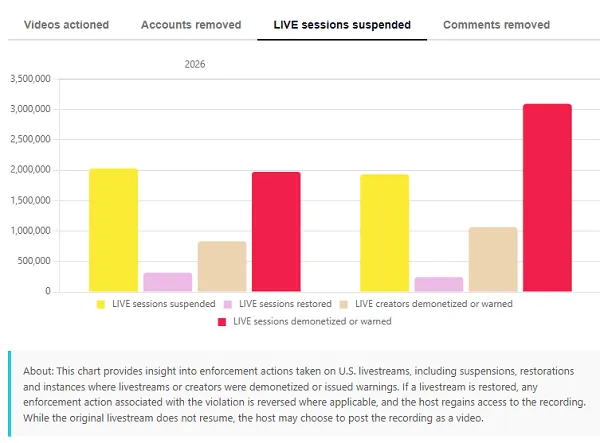
Meanwhile, more livestreams were “demonetized or warned” due to violations of the platform’s policies.
In terms of content specifics, the majority of removals reported for the current period were due to violations of TikTok’s terms related to regulated goods and services.
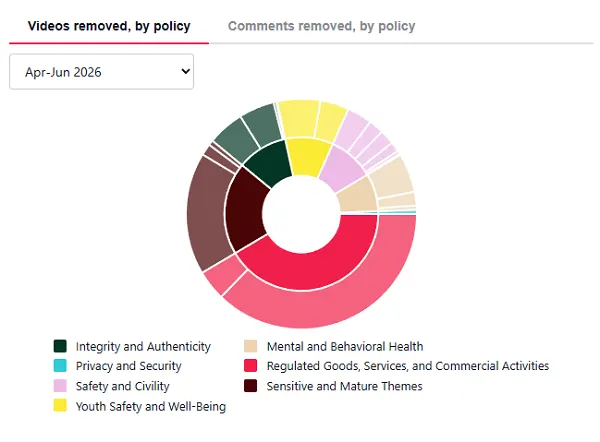
TikTok’s rules on this element cover content that depicts drugs and alcohol, as well as gambling, counterfeit goods and high-risk financial services.
This parameter also covers services that sell fake likes, views and followers, so it’s a fairly broad enforcement segment.
Body exposure and sexualized behaviors were the second most common area that led to video removal. Those trends were consistent with TikTok’s first-quarter report.
TikTok USDS added that it conducted various investigations into covert influence operations that had attempted to mislead users and manipulate public opinion.
TikTok said that in the second quarter, it disrupted 30 such networks that attempted to manipulate engagement on TikTok, resulting in the removal of more than 76,000 accounts and 4.8 million associated posts.
This is a key area of focus for the platform heading into the U.S. midterms, when voter influence activity is likely to ramp up. Earlier this month, TikTok outlined a range of initiatives to combat election-related misinformation, including the establishment of a dedicated U.S. Election Mission Control Center, which will identify emerging risks, coordinate investigations and mitigate potential threats as they develop.
Given the political influence behind TikTok being sold into U.S. ownership, with the White House vetting and approving the local ownership group, this will be a key area of scrutiny for the app.