X released more insights into how its algorithmic code decides the reach of each user’s posts. The move is designed to provide more transparency into how the platform’s system amplifies or demotes certain in-stream updates, as well as address concerns about potential manipulation of content distribution.
The update to X’s code display, published on GitHub, now includes more insight into how its source code functions. Additionally, X is testing a simplified process to make it easier for users to see whether specific posts have been shadowbanned or restricted.
As explained by X: “Today, we are taking another major step in our ongoing efforts to increase transparency. We’re open-sourcing the code that affects a post’s visibility in the For You timeline, and releasing a new tool that shows people labels applied to their account or posts that might limit visibility. The goal is straightforward — we want people to be able to answer for themselves whether a platform is limiting their reach, whether the system is fair, and why they see particular content.”
The main update is an expansion of its GitHub listing and features more insights into X’s post display ranking, including content labels that can impact post visibility.
That will give users more insight into the performance of each individual post. Meanwhile, X VP of Product Keith Coleman said users can now enter the app’s source code into any LLM, along with their account data, in order to learn what affects their own posts' visibility.
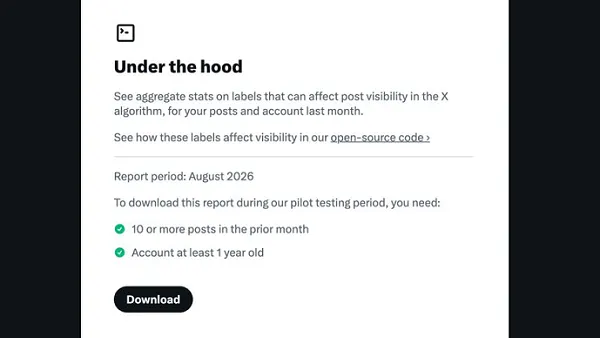
Which also involves the second element. X is trying out a new system that will let users download info on any labels or tags that have been assigned to their posts over the past month.
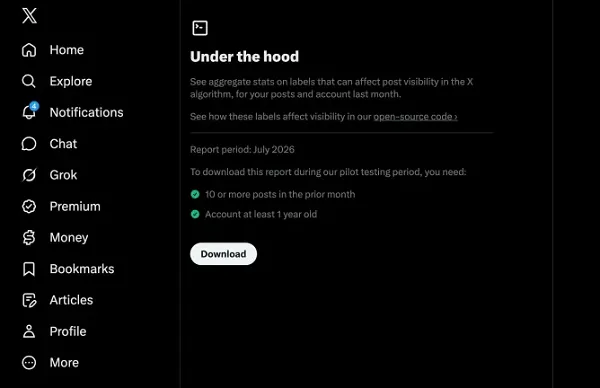
With this, X users who post regularly will be able to check for themselves whether their content is being restricted in any way, and whether X has tagged their posts or profile with restrictions at any time.
Unpacking this isn’t exactly a straightforward process, and it will take a level of manual input in order to glean these insights. But for X users in its creator revenue share program, it could be a valuable process and help them understand any issues that could impact content performance.
X wants these additional transparency notes to reassure users and provide more clarity around suspected restrictions and shadowbans, which may or may not be real a thing. Shadowbans, in themselves, are generally not applied the way that most users think they are, but account and post-level restrictions are enacted based on a range of parameters.
X is hoping this new update will address concerns on this front, though at the same time, the company’s history with algorithmic transparency isn’t great, despite its claims to the contrary.
In 2023, just months after acquiring the platform formerly known as Twitter, X owner Elon Musk authorized the publishing of a version of the app’s feed algorithm in GitHub. At that time, Musk vowed to maintain this with regular updates, so that anyone could see how posts are ranked and displayed in-stream.
However, the data shared was only a partial listing, with various elements withheld from public display. The code was also never updated, despite Musk’s promises, which left many users frustrated at the apparent lack of transparency.
Even so, Musk has continually referred to this as a key marker of transparency, insisting that X is the most open and honest platform in regards to content ranking insight.
Last month, Musk reiterated this and vowed to fully open-source X’s codebase again in a bid to win more trust from platform users.
Given that he claimed X had already done this three years ago, this seemed a little disingenuous. But maybe this new push to provide more insight is part of Musk’s larger directive.
Either way, the new insights could provide more understanding of potential reach restrictions and penalties, and spark new debates around how X is working to amplify and suppress certain elements.
X said it is testing out its individual post labels and tags tool with a randomized group of eligible accounts that are at least one year old.