New Zealand is the latest nation to introduce a ban on social media usage among young teens, according to Bloomberg. The government’s new Online Safety Bill would require “high-risk social media platforms like Instagram, TikTok, Snapchat and Facebook to take reasonable steps to check users are over the age of 16.”
However, the bill “is unlikely to progress” until after the nation’s upcoming election in November, per Bloomberg.
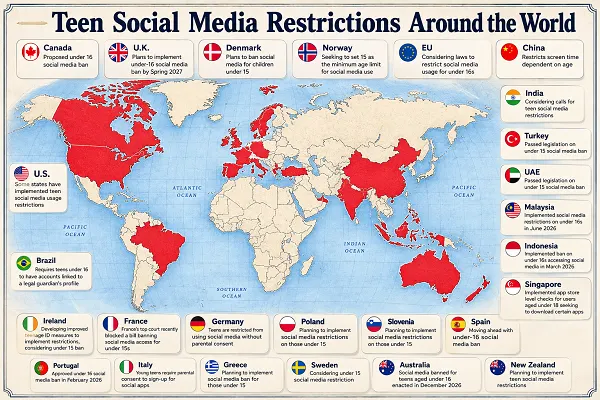
The nation joins a growing list of regions seeking to implement teen social media restrictions, following Australia’s lead. The various limitations are designed to protect teens from potentially harmful exposure and reduce the impacts of overuse.
Around the world, multiple jurisdictions are considering or have implemented teen social media bans, with varying levels of impact.
Indeed, Australia’s own teen social media ban, considered to be the biggest test of social media age restrictions, is seemingly failing on most fronts.
Australia’s eSafety Commissioner released a six-month update on the nation’s teen social media ban earlier this month, which showed that:
- Most underage teens are still accessing social apps.
- There’s been no change in either problematic online use or teen wellbeing.
- Teens who reduced their social media usage increased their use of messaging apps and online games.
These results come despite several platforms reportedly removing hundreds of thousands of teen accounts. Meta recently said it removed 750,000 accounts held by underage users in Australia since the restrictions began.
Evidently, teens are still using social apps despite the government’s rules. That said, Australia’s bans have had some impact on logged-in use, which could have some positive impacts.
But teenagers are going to find a way to use digital tools to connect, whether it’s social media, messaging, gaming or something else. The idea that banning teens from social media will prompt more of them to get outside and engage in person is unlikely, which means that young teens are, at best, going to be pushed from mainstream social apps to more fringe platforms and connection tools.
This is what many experts have warned about, saying these alternative options may be less safe and could pose a bigger threat to young users.
The other key concern, based on Australia’s initial experience, is that social platform age-checking measures have largely proven inadequate, with many teens simply listing an older birth date to avoid detection.
Improved verifications should be a key component of any age-checking proposal, and while nations look to implement teen bans, the results of Australia’s example should be closely examined before moving ahead.