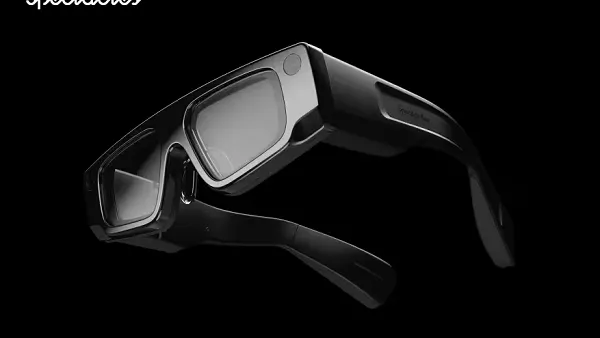
With Snapchat’s first-ever AR-enabled glasses set for launch later this year, the company is now sharing previews of its evolving AR functions, and features that will be built into its new AR device.
Over on the Snapchat Engineering Blog, it’s shared a preview of its new “Shared Experiences” element built into Snap’s Specs, which will make it easier for Specs users to engage in shared experiences with one another, with the device able to detect and share info to help map the surrounding environment of both users.
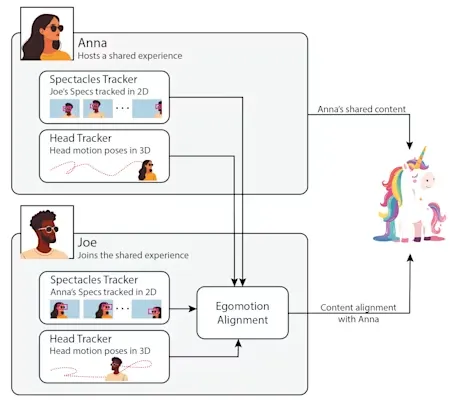
As you can see in this example, using the “EyeConnect” function in Snap Specs, two users in the same physical space can engage in a shared AR experience by simply looking at each other, in order to help map the surrounding area.
As per Snap:
“The algorithm operates by tracking nearby Spectacles and then comparing the motion data other devices sense against its own tracked movement patterns. A robust optimizer finds the 6DoF pose (position and orientation) that aligns both virtual worlds so that shared virtual objects appear accurately in the same physical location for all connected users.”
Through this, up to three devices can communicate with each other via Bluetooth connection to create communal experiences, which will add another interactive element to Snap’s new device, and make it a more engaging virtual option for Snap users.
The idea is that this will facilitate more engaging AR experiences with minimal set-up, making it easier for Specs users to interact in these digital environments with their friends.
Which could be a key selling point for the device, and maybe, Snap can angle this as a major benefit of Specs interaction, facilitating all-new types of collaborative opportunities and ways to interact with its ever-popular Lenses.
But I remain skeptical of Snap’s potential on this front. Snap’s AR Specs are unlikely to be up to the same standard as Meta’s coming AR device, and unlikely to beat Meta on price either, while Meta’s AI glasses have already grabbed so much attention that unless there’s a truly compelling reason to buy AR glasses, I don’t like Snap’s chances.
But then again, Snap has been working on AR glasses for longer than anyone, and it’s long been the leader in AR experiences in its app. That could mean that Snap will be well-placed to gain a foothold with its AR device, while additions like this hint at how Snap is looking to develop its AR experiences for a Snapchat audience.
Maybe that catches on, and maybe Snap can add such engaging, intriguing communal AR opportunities that people will be willing to wear its chunky glasses out in public.
It’ll be interesting to see how AR Specs are received, and what features along these lines are included.