WhatsApp has added d a new set of parental control tools to help parents better manage their kids’ experience in the app. The new elements include connection oversight, controls over channels and Status, and content exposure settings.
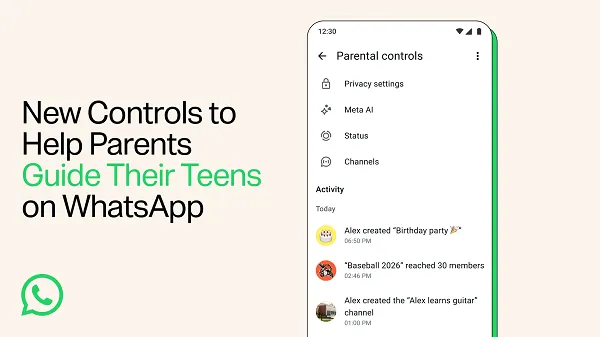
First, parents will now be able to monitor who their kids are connecting with in the app, and keep track of the groups that they join.
WhatsApp said that parents will be able to get notifications when their teen joins or leaves a group, or when a group their teen is part of “grows meaningfully in size.”
Parents will also be able to choose how their teen can use in-app connection features like Channels, as well as whose Status updates they can see and who can see theirs. Parents will also be able to manage their kids’ use of Meta AI and control settings that limit the content their children are shown when using Meta’s artificial intelligence tools.
WhatsApp said that parents will be able to choose their level of oversight and control, providing additional peace of mind and assurance.
As explained by WhatsApp: “Parents will be able to choose the right privacy settings for their teen, like who can see their profile photo or add them to groups. If a teen wants to relax any of those settings, they’ll need their parent's approval via a parent-set PIN.”
WhatsApp usage has been rising in most regions as more users switch to messaging and sharing content within enclosed groups and chats, as opposed to posting publicly.
A key value proposition of WhatsApp is that it’s private and encrypted, which gives users peace of mind that what they share in the app won’t be amplified outside of their group.
That element won’t change with these updates.
As per WhatsApp: “Even with controls turned on, your teen's personal messages and calls stay private and protected by end-to-end encryption. No one outside of the chat, not even WhatsApp, can see or hear them.”
There are still screenshots and other ways to expose WhatsApp messages, but the key point is that access is restricted to those within the same groups. These new settings just enable an additional level of assurance for parents regarding who teens are connecting and engaging with.