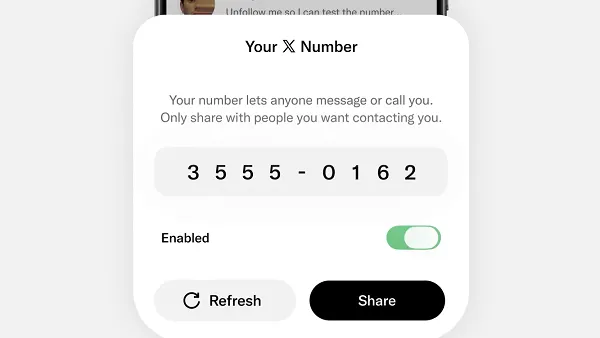
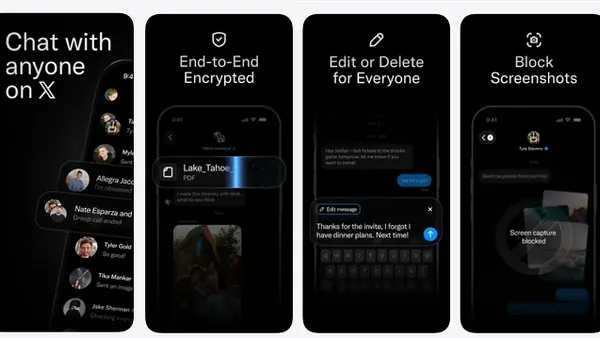
X has officially launched its new number access option for XChat, which enables X users to share numeric access codes that can be used to send DMs between non-connections.
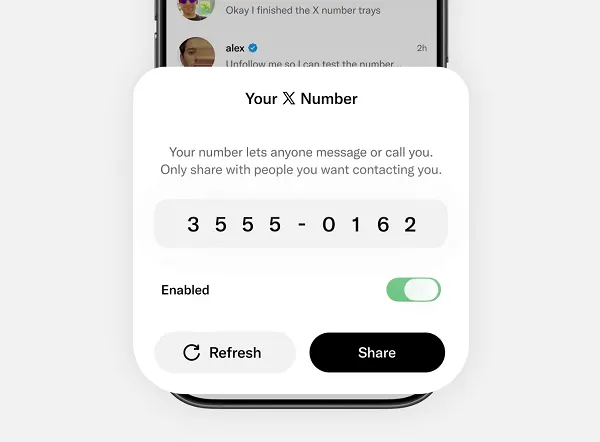
The update was made available to some users earlier this month.
Those with a limited use code can access users’ DMs to send messages and initiate audio and video calls via XChat.
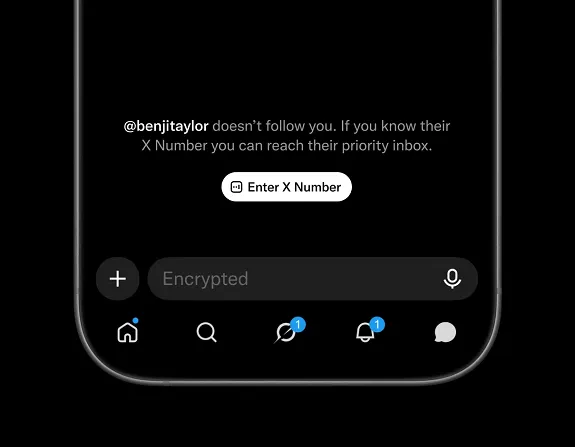
X said the option will provide another way for people to message or call without users needing to accept message requests or follow each other. That will enable more X users to use DMs, and could be handy for facilitating messages with event attendees, selected business partners, client prospects and others.
Though X is keen to note that this is not a phone number, and is also different from its chat safety number option, which enables users to match safety codes within messaging.
There’s also this interesting note within X’s number code overview: “People with whom you have already exchanged messages with in a direct conversation can see your X Number. They may share it with others. Anyone who has the current number can use it to message or call you while it is enabled, even if you do not follow them.”
X said that users can opt to hide their access code if they wish, while users can also disable the code at any time to cut off access via that method.
X users can also generate a new number code whenever they choose.
It’s another means to facilitate private discussion on X, and invite more people to send a DM, though what exactly X is doing with its revamped messaging service is a little unclear at this stage.
Late last week, the separate XChat app, which was launched in April, was removed from both the Apple and Google Play stores, with X seemingly shutting down its stand-alone messaging platform.
Which makes sense, given that X is looking to build itself into an all-in-one everything app. But given that the separate XChat app was only available for four months, why was it launched at all?
As per its usual approach, X hasn’t shared any insight into the decision, but it does raise questions about the company’s broader messaging strategy, if it has one.