As marketers look toward the second half of 2026, they’re tasked with formulating an effective, early approach to holiday promotions so companies can maximize brand exposure and sales results in the all-important last quarter of the year.
It’s also important to consider emerging opportunities and potential new pathways to reach users because online behavior shifts and new discovery trends and pathways emerge.
Pinterest, which is now up to 631 million shopping-focused monthly active users, could provide a lot of possibilities. The platform has been working on its discovery tools, and has been aligning and tailoring its search results to each user. Meanwhile, it’s also become a key reference point for many shopping trends.
Here are some key tips that can help marketers establish a home base for their brands in the app.
1. Use Pinterest Trends
Pinterest has built up its trends tool over the past few years, and the app now offers insights into overall Pin trends and shopping-specific insights. It also offers the ability to search the app by keyword.
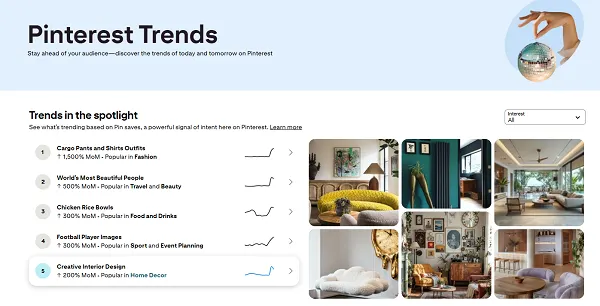
Marketers can glean insight into growing and seasonal trends, as well as related search terms. They can also filter results by demographic and add qualifying keywords to searches. Tapping through on any highlighted topic also provides Pin examples to demonstrate what’s resonating with users.
The platform also offers a Promote a Pin activation for brands. The company said in an email that promoting a brand pin can be especially helpful for companies looking to test how their organic creative posts might work as ads.
2. Use Pinterest search
Pinterest’s in-app search function lets users filter by criteria including Pins, profiles, products and boards. Each of these categories can help marketers to glean more insights into trends and topics. The search function is also useful for identifying top influencers within their niche.
Depending on influencer reach and engagement, this could guide brands towards potential brand partners in the app.
3. Note what’s working
Marketers should also note the content formats that drive the most engagement for both general trends and shopping insights. That includes colors, images and videos, all of which can inform brand approaches. Marketers should also note product description details and consider what other related brands are focused on.
Standing out is what matters in the Pin feed, so marketers need to take engagement stats into account as well. In addition, it can help to look at comments, which are less present on Pinterest, but can still provide some guidance.
Timing is also important. The company said that when brands take note of key seasonal or life moments in the app, it can guide a strategy that connects with people while they’re planning for specific events.
4. Hashtags?
Should marketers use hashtags in posts?
Pinterest’s search tool is getting much better at displaying content based on related context, so marketers don’t need to add specific hashtags to their Pins. However, relevant keywords are important, so it’s worth noting the key terms that others have included, and searching for them in Pinterest Trends to see if people are actually using them to discover content.
5. Formulate a strategy
Based on this initial research, marketers can formulate a Pin strategy based on what’s actually resonating with their target audience.
In particular, having a more specific focus on shopping trends could be valuable. That approach would align with Pinners that are using the app for discovery on their path to purchase.
6. Analyze and improve
Once the strategic approach is in place, marketers can use their Pinterest profile Insights to examine what’s working and what’s not, and double down on the best approaches.
As always, it’s important to focus on what’s actually driving sales activity, rather than on general metrics. Each business will have its own goals, so it’s worth narrowing the focus down to the right numbers that lead to real results, as opposed to poring over vanity data points.
The company also recently launched a new artificial intelligence-powered business assistant, which it said can help brands improve their ad performance.
Pinterest has established itself as a key product discovery platform, and as such, it can be a valuable complement to the overall social media strategies of many brands. Not all businesses will need a Pin presence, but it is worth doing the research and seeing what’s resonating with Pin users, and especially what people are looking to buy based on Pins.