LinkedIn has shared some new insights into the evolving B2B marketing landscape, and how marketers can tap into the latest shifts in order to maximize their advertising performance, and resonate with key decision makers.
LinkedIn’s been exploring key B2B market trends over the past few weeks, with the rise of video and events also now playing an important role in driving discovery and sales in the segment.
But LinkedIn says that the biggest key trend of the moment is that people are looking for more human connection in B2B, and information from trusted voices in their niche.
As per LinkedIn:
“In B2B, people increasingly buy from people, not companies. The future of thought leadership is about natural, fluid partnerships between brands and human voices that buyers already trust.”
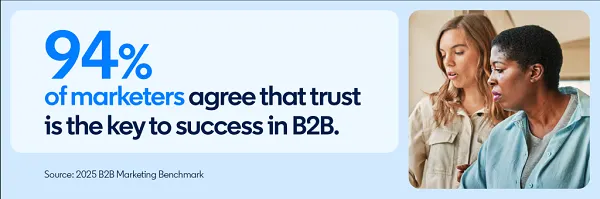
And, of course, LinkedIn, in particular, is a key vehicle for this, enabling B2B leaders to share their personal insights, and become influencers in their own right through LinkedIn posts.
According to LinkedIn’s data, thought leadership is the best way to imbue trust in the B2B buying process, with 75% of decision-makers indicating that thought leadership content “is a more trustworthy way to assess a company’s capabilities than its product sheets or marketing materials.”
“More recently, our 2025 report placed a specific focus on how thought leadership can influence hidden buyers, who tend to hold major sway in buying groups but are hard to reach with traditional sales and marketing methods. A vast majority of these stakeholders (95%) say strong thought leadership makes them more open to outreach.”
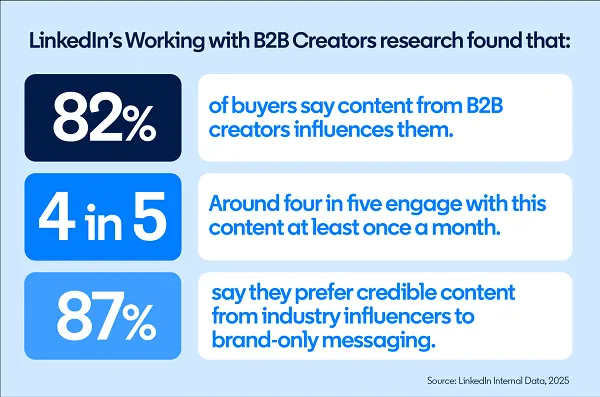
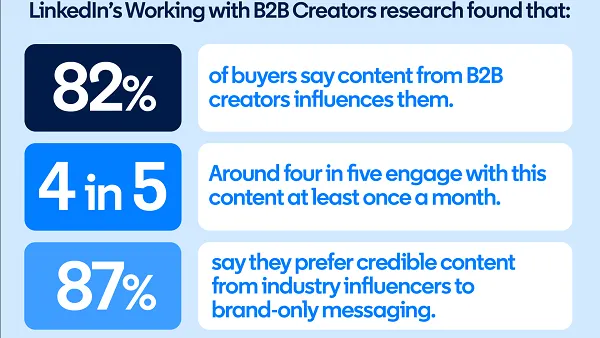
Indeed, LinkedIn says that creators are becoming the new word-of-mouth in B2B, with more people turning to creators that they trust to help make sense of complex elements, and better understand what they need.
“In early awareness, nearly six in 10 buyers say they discover new brands through creator content, while in the decision phase, nearly half report visiting a vendor website after engaging with creator content.”
LinkedIn’s data also points to the value of employee advocacy, and having your staff share company news to help amplify the latest.
“LinkedIn data shows that the combined networks of employees are about 12x larger than a company’s own following. When those employees share their perspectives and experiences, they become some of the most credible voices your brand has — especially when they’re speaking as practitioners first, and ‘brand representatives’ second.”
LinkedIn suggests that brands tap into these shifts, while also leaning into the platform’s own ad tools, like Thought Leader Ads, to help amplify relevant perspectives.
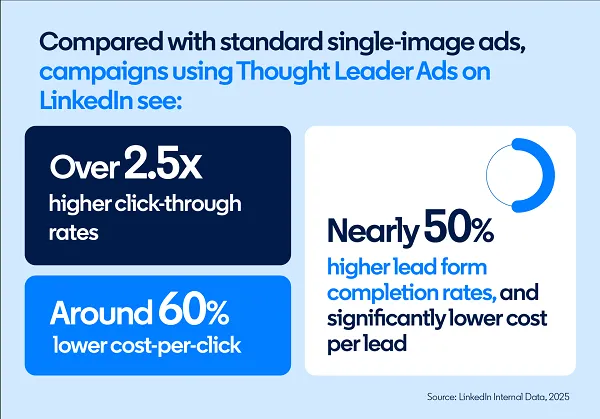
By highlighting these more personal experiences, and human connection, you can link into the need for more direct response, which may help to guide users in their buying journey.
Some valuable notes, which could give you more context for your LinkedIn marketing approach, and how to maximize appeal with B2B buyers in 2026.
You can read LinkedIn’s full B2B buyer trends overview here.