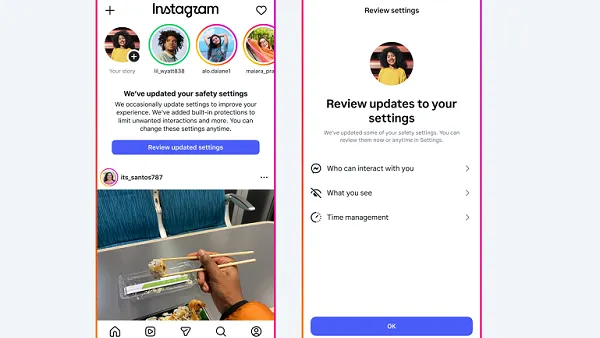
Meta announced on Monday that it’s expanding its use of its artificial intelligence-powered age estimation technology to ensure that more teens are placed into age-appropriate experiences. The move comes amid ongoing global discussions about teen social media restrictions.
Over the past year, Meta has been working to improve its age detection system, which utilizes visual and contextual analysis to determine a user’s age.
As explained by Meta: “We use AI technology to find people we suspect to be teens, even if they use an adult birthday, and place them in Teen Account protections. Since first introducing this technology, we’ve been placing more teens in age-appropriate protections and are encouraged by the results.”
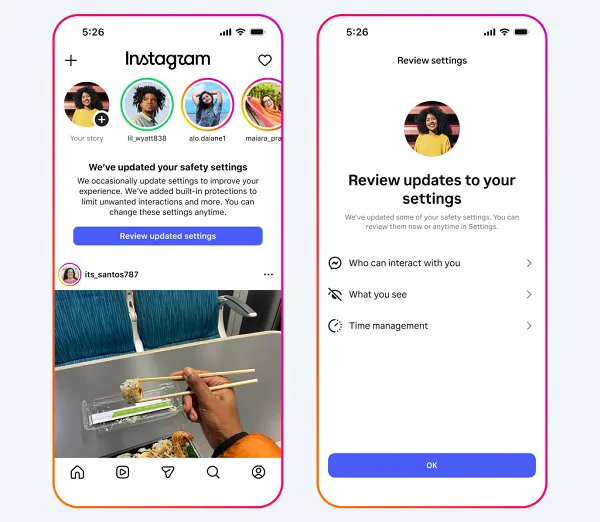
Meta said that this process has ensured that millions of teens across the world are placed into protective experiences, even when teens misrepresent their age.
“We’re continuing to roll this technology out on Facebook and, later this year, we’ll begin launching similar technology globally on Threads,” Meta said. “This expansion builds on our commitments under our recent agreement with 52 bipartisan attorneys general to strengthen how we identify teens and children under 13 on our apps.”
In August, Meta agreed to pay $18 billion and implement a range of new teen protection measures to settle a landmark lawsuit brought by a coalition of U.S. attorneys general. By settling the case, Meta avoided a trial, which could have put a spotlight on the harms caused by social media.
Some of the measures Meta agreed to implement as part of this settlement included time limits on teen social media usage, blocks on notifications during school times and overnight and the capacity for teen users to set a non-algorithmic feed as the default.
Meta has implemented these measures yet, but as more regions consider similar restrictions, the company appears to want to get out in front of any demands, in order to present itself as taking proactive action.
But Meta would probably not be taking these steps if not for the U.S. attorneys general’s case.
The bigger question, however, is just how effective the company’s automated account estimation and teen detection tools will be. While Meta is keen to highlight the potential here, evidence suggests that this new push won’t be as effective as the company is claiming.
In Australia, for example, Meta said it removed more than 750,000 profiles it detected as belonging to teen users. That move was part of the company’s compliance with Australia’s social media ban for users under age 16, which went into effect in December 2025.
That’s a significant amount. However, a report from Australia’s eSafety Commission published in August indicated that 81.5% of underage users continued to access restricted apps.
That suggests that either Meta’s detection systems are not as effective as the company claims, or teens are simply finding new ways to evade detection.
On Monday, Meta also announced an Australia-specific measure that will see the company incorporateApple’s age-range signal as another means to determine user age.
“The process is simple,” Meta said. “When a parent sets up a smartphone for their teen, they have the option for the app store to confirm the age of the person using the device and assign them an age range. Then, each time the teen downloads an app, Apple passes that age range to the developer — Meta, for example — confirming whether the teen meets the app’s age requirement.”
Meta said it’s voluntarily using this information, while also reiterating its call for app stores to play a bigger role in determining user age at the download level.
Finally, Meta used Monday’s announcement as an opportunity to deflect some of the pressure it’s been under regarding age checking by calling on other platforms to implement similar protections.
“We’ll continue to do our part to proactively ensure teens are in age-appropriate experiences on our apps,” Meta said. “That’s why as part of our agreement with 52 bipartisan attorneys general across US states, territories, and the District of Columbia, we’re investing in even stronger technology to proactively catch accounts that may belong to children under 13. We’re also strengthening the technology we use to identify accounts that may belong to teens between the ages of 13 and 17 so we can ensure those accounts are placed in experiences designed for teens, even if they give us an adult birthday. As Instagram is just one of the many apps teens use, we’re also calling on our industry peers, TikTok and YouTube, to adopt these same practices to keep teens safe.”
It seems like a questionable approach, using the critically important issue of protecting teen users as corporate leverage.
But that's the angle that Meta's going with, as it seeks to dilute the potential impact of such changes on its business.