ChatGPT remains the most popular artificial intelligence chatbot on the market for American consumers. Meanwhile, most people in the U.S. are using chatbots to assist with search, as opposed to image generation or for professional usage.
That’s based on the latest study from Pew Research, which conducted a survey of more than 5,000 Americans to glean more insight into the rising use of AI chatbots amid the broader AI shift.
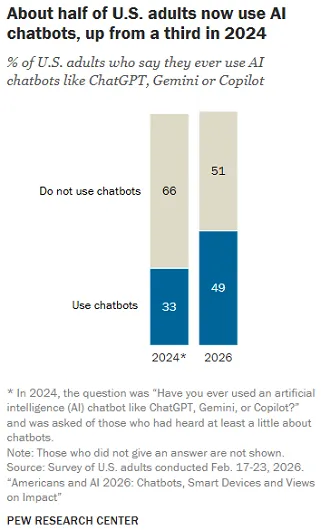
And AI usage is clearly rising. The results showed that around half of U.S. adults are now using AI chatbots, up from 33% in 2024.
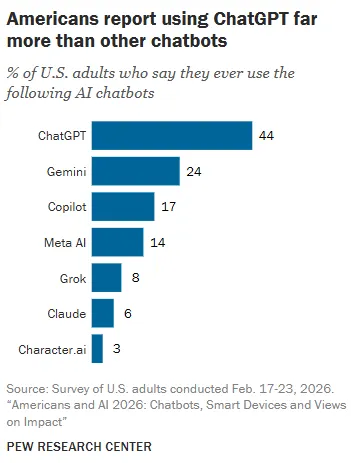
The data also found that 44% of U.S. adults who use chatbots are using ChatGPT, despite rising competition from other apps such as Claude.
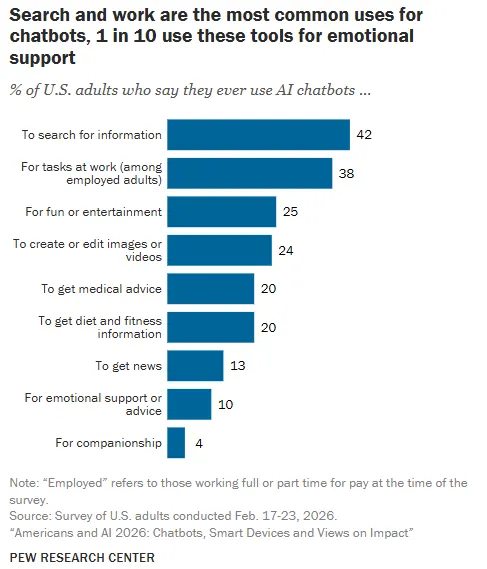
Interestingly, only 24% of people are using AI chatbots to create images or videos. Despite the rate at which social media platforms are pumping out new features to do exactly this, evidence suggests that this is not a popular usage option.
Why are the major platforms so intent on prompting people to use them for that? It’s a mystery. Maybe they’re just impressed at the capacity of their own systems.
As shown in the above chart, Google’s Gemini is the second most popular AI chatbot, followed by Microsoft’s Copilot, Meta AI, then Grok, Claude and Character.ai.
Claude has seemingly been getting more attention of late, but the data here underlines the significant advantage ChatGPT has created by launching first, and becoming synonymous with AI usage.
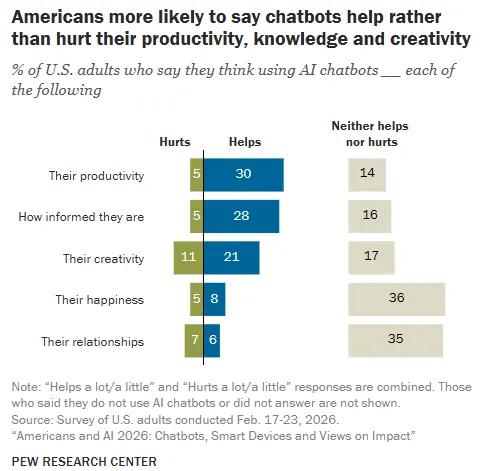
In terms of practical value, 30% of respondents indicated that AI chatbots improve their productivity and help to keep them informed.
Though that value is still largely confined to discovery, with the majority of AI users only using the tools for search:
Also, this is a bit of a painful reminder for web publishers and businesses that gain from referral traffic.
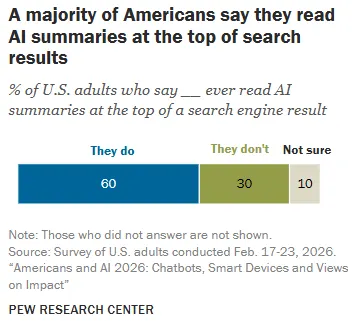
It seems most people who see Google’s AI overviews are using them, as opposed to scrolling down further and clicking on links.
Last August, Google said that its AI overviews weren’t having a significant impact on referral numbers, with searchers who were shown AI overviews seeing more links on screen, and tapping through on a broader range of websites.
But it does seem like providing a direct answer to user queries has had some impact.
Pew’s data provides more insight into the rising use of AI tools, and more context as to the value that AI is providing, or not, at this stage of what is being called a major shift in digital connectivity.
The insights here suggest that this may not yet be as significant a shift as some suggest, but there are clear points of value that are changing user activity.