LinkedIn continues to gradually add more identification qualifiers into its systems in order to limit scams in the app and combat misrepresentation, however recent concerns with its verification partner Persona could impact the expansion of this process.
In September, LinkedIn expanded its company verification option, which enables businesses to confirm they are the official presence of their brand. The move also made workplace verification a requirement when a member adds or updates a leadership or recruiter-related role.
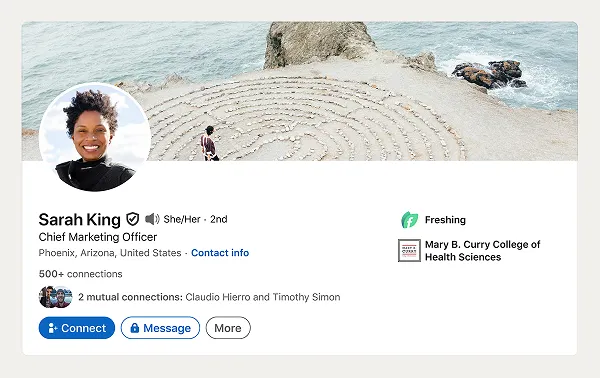
LinkedIn also added executive-level job title verification, meaning that all high-level titles, such as executive director, managing director and vice president, need to undergo verification.
As per LinkedIn: “If your job title requires verification, you’ll be asked to do so while updating your job title and will receive instructions on how to verify your workplace with your work email. If the email you entered isn’t accepted, please double-check that you’ve entered the correct email and that it is an email domain owned by your company. Public domains or personal emails are not accepted.”
These combined efforts could help expose fraudulent recruiters and recruitment scams, while also addressing a long-standing gap in LinkedIn’s security that allowed any user to list themselves as an employee of any business, with no verification or checking required.
Of course, checking every person’s bonafides would be a huge undertaking, and one that may not be possible within LinkedIn’s current systems. But by having more checks and balances and ensuring that at least some of the more high-level and directly influential roles require verification, LinkedIn is taking some important steps to combat scammers and better protect its members.
Which is why the recent Persona concerns could be a big blow for the app.
Last week, reports suggested that Persona, which is a key partner for LinkedIn’s verification program, was sharing users’ personal info with its expanded data partners, as well as accessing expanded data on users who seek to verify their information via the platform.
Persona responded to the claims, noting that it has addressed potential vulnerabilities, and confirmed that “no secrets or customer data were exposed through the highlighted gaps.”
But questions remain as to exactly how Persona utilized personal data entrusted to it. If further issues are exposed, that could see LinkedIn’s ID process derailed.
It’s an important focus for LinkedIn, and the company is tackling the verification challenge thoughtfully, without overloading its systems with requests, and with strategic purpose in mind.
That could play an increasingly important role in the future, as more and more artificial intelligence tools come into play that may be able to simulate humans better than ever before, which is why the Persona problem could become a much bigger concern for the app.
(Note: SMT asked LinkedIn for a quote on the Persona situation, and the company referred to Persona's statement, as referenced above.)