LinkedIn has shared an update on the usage of its new “seems like AI slop” option, which launched earlier this month, providing a systematic process for people to report content that appears to be generated by artificial intelligence tools.
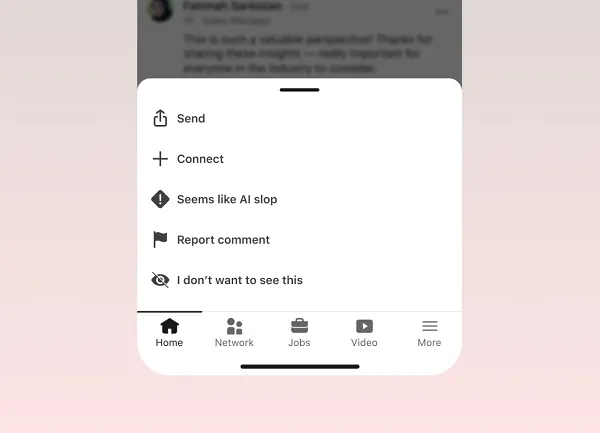
And certainly, there seemingly is a lot of slop in the app.
LinkedIn Chief Product Officer Hari Srinivasan shared that in its first two weeks, the option was used by more than a million people.
At the same time, the platform has also sought to highlight the actual purpose of this option and what happens when users report “seems like AI Slop.”
Importantly, LinkedIn clarified that reporting AI slop in the app doesn’t necessarily mean that content will see less distribution as a result.
As explained by LinkedIn Creator Product Lead Sam Corrao Clannon: “We internally define AI slop as content that is potentially sophisticated or polished in its presentation, but lacks substance. So it doesn’t have any particular experience, perspective, or insight, but is sort of just empty text that’s posted to take up space and garner attention without effort on the other side.”
Corrao Clannon added that the option is not designed to target all use of AI in LinkedIn post creation, noting that people using AI to refine their language is fine. This is more specifically focused on junk posts that people don’t want to see.
Corrao Clannon also said the option is not “a reporting path for policy violations,” and is rather designed to give each individual user more control over their own feed while also giving LinkedIn more insight into what users view as low substance, low effort content.
“This is a way that we’re giving viewers more control over their own feeds by allowing them to say this is not something that I’m interested in by virtue of it sounding like generic, empty, AI-generated content,” Corrao Clannon said.
In other words, when a user reports content using the AI slop option, that will only impact what they see in their feed, and won’t necessarily impact overall distribution of a post in the app.
Srinivasan added that no single piece of feedback determines how content is distributed on the platform. “We look at many signals together, and we've built safeguards to help prevent individual feedback from being used to unfairly target other members,” he said.
So while a user who reports content will likely see less from that creator, the overall performance of a post won’t be impacted unless a lot of LinkedIn users report the same concern.
On that front, LinkedIn is also rolling out new notifications to users who do get a lot of AI slop reports, alerting them to potential concerns.
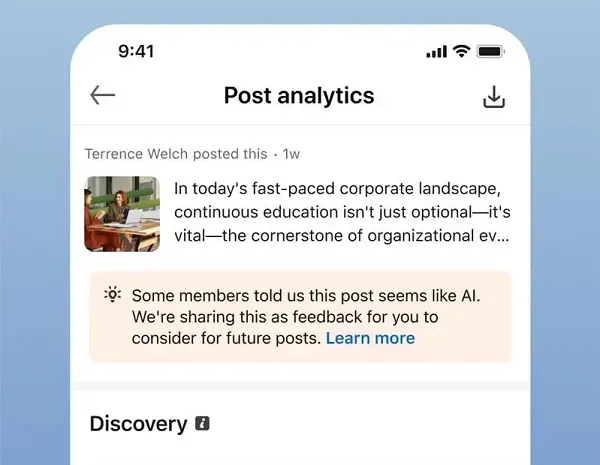
So Linkedin’s trying to take an informative, rather than punitive approach to combatting AI overuse, by prompting users who may have posted AI slop to change their ways.
This option is already delivering impact.
According to Srinivasan, overall content that LinkedIn defines as AI slop is now seeing 40% fewer views than just a few weeks ago.
“Despite the progress, we know we have more to do to ensure LinkedIn remains a place where you can find real people & real perspectives... this all remains very top of mind,” Srinivasan said.
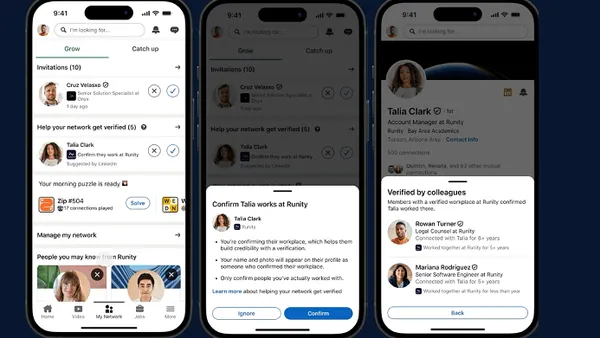
LinkedIn also wants users to go through its verification process to confirm that they are real, actual humans. It’s also now using this as a signal so that people can filter responses in the app.
In combination, LinkedIn is hoping it can get ahead of the AI content wave, and dilute the impacts of empty AI posts on audience interest and engagement.