LinkedIn wants to give creators more insight into their content performance in the app, via expanded insight data on how much of their post reach is coming from their followers, and how much is from those they’re not directly connected to.
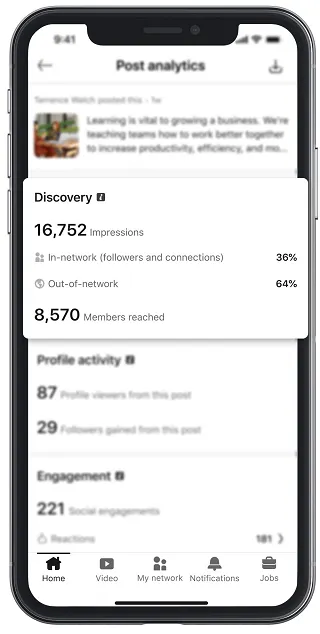
As explained in a post by Sam Corrao Clanon, LinkedIn’s director of creator products, LinkedIn will now give creators a more specific breakdown within their post analytics that will show who their posts are reaching.
As explained by Corrao Clanon: “As this ramps globally, you’ll begin to see a percentage breakdown of who has seen your content, based on if they’re already in your network or not.”
The breakdown will display “in network reach,” which, as it sounds, shows who among the creators’ network of connections and followers saw the post, versus “out-of-network reach,” which is “the percentage of your post reach coming from those who weren’t following and/or connected to you,” per Corrao Clanon.
“These new audiences are discovering you through distribution surfaces (e.g., feed recommendations, reshares, search, etc.),” Corrao Clanon said.
The expanded metrics will make it easier to understand actual LinkedIn post reach, and how content is resonating, or not, with specific audiences, which could impact future planning.
“You’ll see these metrics in your post analytics as a breakdown in the discovery section under impressions,” Corrao Clanon said. “I’m excited to hear how this helps your content creation journey, especially what it reveals about the posts that expand your audience versus the ones that resonate more deeply with your network.”
It could be a valuable indicator to facilitate audience growth, and refine content strategy to maximize performance.
On another front, LinkedIn has also updated the format of its document posts, which now appear in more compact carousels in-stream.
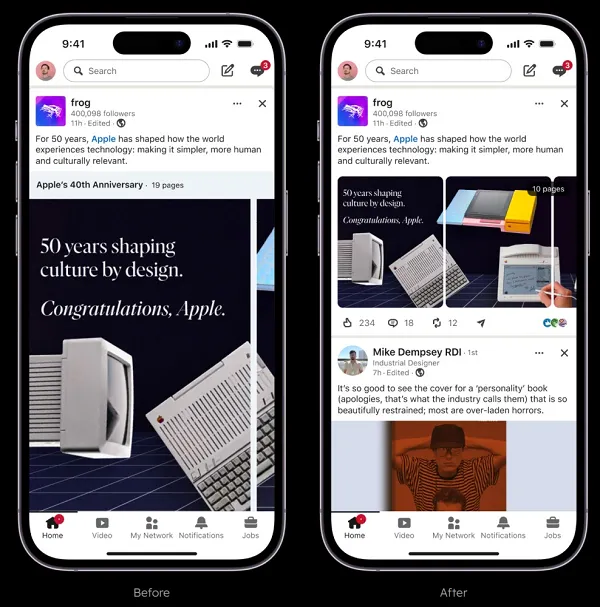
As shown in this comparison, posted by social media expert Lindsey Gamble, LinkedIn updated the presentation of its document posts to make them more streamlined and refined within the feed display.
It’s a relatively minor change, though it is a relevant one, particularly considering that, according to research published by Socialinsider earlier this year, document posts generate the highest levels of engagement out of all LinkedIn content types.
This updated display format could make them even more engaging. Or maybe this will make them less enticing than they used to be.