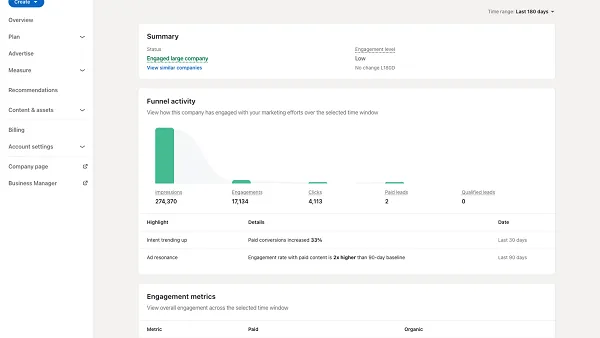
LinkedIn is expanding its user and business verifications in-stream, as part of its broader effort to ensure that users can trust the people and brands they engage with.
The updated options builds on its existing user verification process, which provides a free way for LinkedIn members to confirm their identity through third-party ID checking tools. Moving ahead, LinkedIn will also be adding internal verifications from users’ past colleagues, while it will also enable brands to remove false employee listings, further solidifying its data integrity.
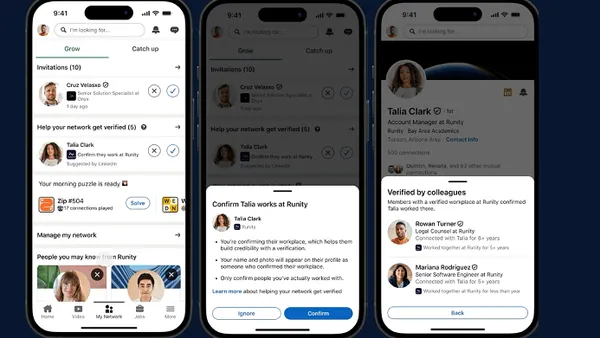
First, on colleague verification. LinkedIn is testing an option that will enable past colleagues to confirm that a user did actually work at the place they’ve listed on their profile.
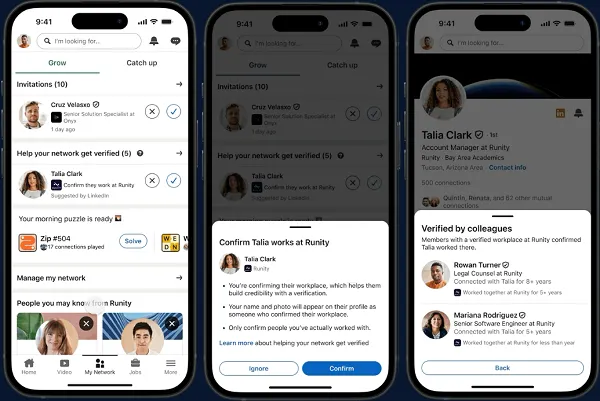
As shown in this sequence, LinkedIn members will now be prompted to confirm that other members worked with them at corresponding employers, which will add credence to experience claims in the app.
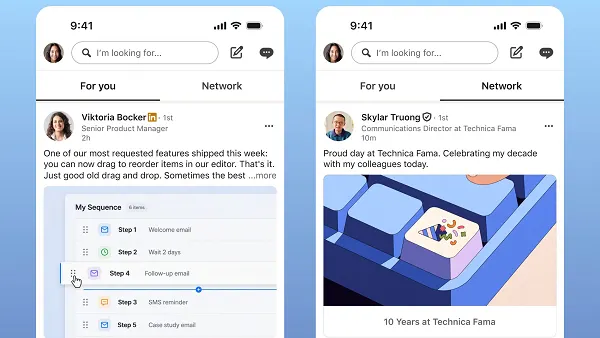
Once a member receives enough confirmations, LinkedIn will add a verification badge to their Profile.
Though interestingly, LinkedIn said that users will be able to opt out of displaying these verification badges if they choose. This could potentially undermine the whole process, although if enough people verify their info, it could raise questions about users who don’t display verifications.
LinkedIn will also let company pages remove people who have listed themselves as current employees of that business.
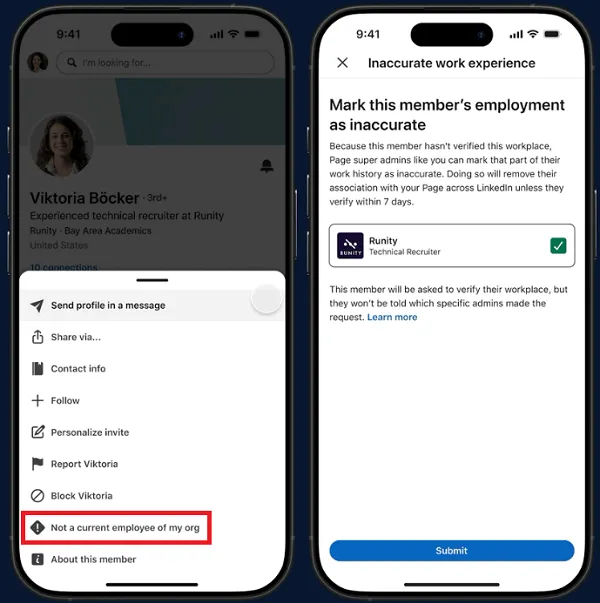
The option will hopefully ensure more accurate listings by giving businesses the opportunity to remove people who falsely claim to be employees.
Though it will only be available to verified company pages at this stage.
LinkedIn company page verifications, which launched in August 2024, are still in limited access, though the option was expanded last year to all brands that signed up for LinkedIn’s Premium Company Page plan.
LinkedIn’s official overview of the option says that eligibility for company page verification “may be based on meaningful engagement with LinkedIn, such as posting regularly, or responding to members, as well as having an established commercial relationship with LinkedIn.”
Which includes buying LinkedIn ads or having a Premium Company Page subscription.
In other words, if brands want to be able to remove false employee listings, they may have to pay for Premium.
Finally, LinkedIn is also partnering with Truecaller and PeerSpot to expand its verifications to displays to more third-party platforms.
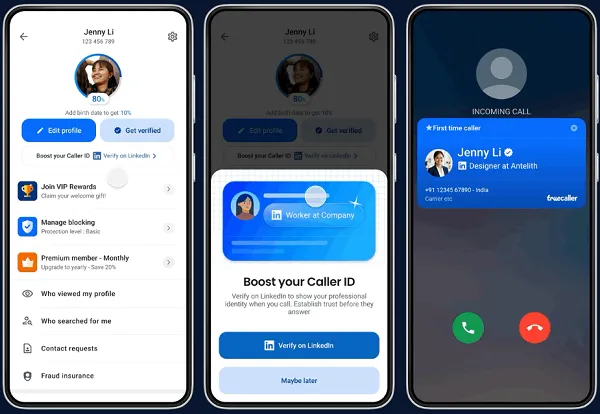
LinkedIn has already partnered with Adobe, TrustRadius, and UserTesting for expanded verification displays, providing more ways to use LinkedIn as an ID reference.
Which is becoming more important, as LinkedIn explained: “As AI reshapes the workplace, trust has become our most valuable professional asset. LinkedIn has invested tens of millions of dollars in verification, helping to build a more trusted professional community where more than 115 million members have now verified their identity or workplace for free.”
That’s up from the 100 million verifications that LinkedIn reported in December 2025. LinkedIn also said that verified members see 50% more post engagement and close to 90% more profile views.