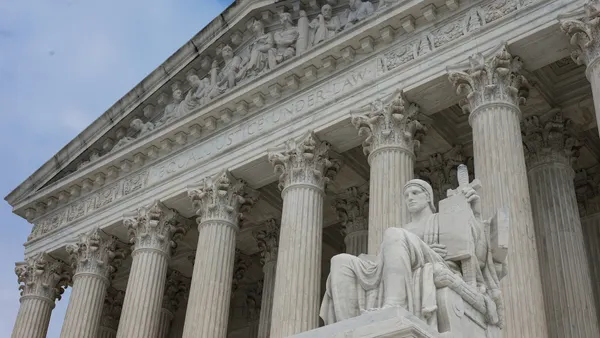
If you want good examples of how not to run a social media campaign, take a look at almost any politician's social media efforts. All around the country, politicians and the staffs that power their campaigns are cranking out streams of awkward, forgettable, and/or mindless social media updates. This begs the question, why are most politicians, some of whom are actually very smart people, so bad at social media?
At Laser Burn Media, I'm often approached by politicians, running for all levels of office, who are interested in incorporating social media into their campaigns. As such, we've had the opportunity to get a close look at the inner workings of these campaigns and their views and opinions on social media. To say the least, it wasn't all that of an impressive experience. In my experience, there are several factors that are working against a political campaign successfully using social media. Here are some of the more common ones...
- Viewing social media a broadcast tool. In most of the campaigns we've worked with, the social media is handled by the communication director. The usual setup involves this person writing a press release and then having whoever has been tasked with running the new media operation, usually an intern, push it out across Twitter and Facebook. There is no attempt to use social media to build or leverage relationships because the campaign isn't trying to build relationships. The reality is that they are viewing the mechanics of Twitter in the same light as they do radio and television. When used as a broadcast medium, with no regard to the social element of the technology, social media will fail.
- Focused on the wrong things. Many campaigns consider a successful social media campaign as one that ends up with their candidate having more Facebook fans than their opposition. When confronted with this mentality, I explain that while having a large number of followers on whatever social media platform can be a good thing, it shouldn't be the focus of the efforts. Instead, I argue, efforts would be better spent in using social media to identify a target audience and then develop, nurture, and strengthen relationships with that audience. In this way, the campaign can begin to have a real influence in the online sector. At the end of my presentation, the response I often get is something along the lines of, "So, yeah, but how many Facebook fans do you think we can get?"
- View Social Media as a fad. Even though some politicians have at times claimed to have invented the Internet, the reality is that most politicians aren't early adaptors. I'm not exaggerating when I say that I've met many politicians who are proud of the fact that they don't know how to use a computer or send a text message. This, I'm told, is what they pay a staff for. Considering this, its no wonder that many campaigns are so reluctant to spend money on social media efforts. Even if members of the candidate's staff are in favor of investing in social media, the resistance put up by the candidate (who pays their salaries) is often too much to overcome.
- On again / off again. When it's not campaign season, many candidates and their staff completely ignore (or almost completely ignore) social media all together. They don't see a need to update Twitter or interact with their Facebook fans after the election is over. In very short order, whatever community the campaign has managed to build around their brand falls apart. This means that come next election, the campaign has to start from scratch. Not the best way to run a marketing campaign of any sort.
Now, obviously, not all politicians or political operatives fall into this category of social media screw-ups. Some are actually quite good at it and seem to have an understanding of how to effectively use social media. However, regardless of which political party they represent, these candidates are in the minority. Most, in my experience, fall into at least one of the afore mentioned traps. This is why that for many social media professionals, working with political campaigns is so frustrating at times.
What are some of your observations on how politicians and candidates use social media? Have any examples of good or bad practices that you've seen?
-Dan Cheek