It’s the end of the first week back in the office. So how are we all feeling?
Over the past week, I’ve outlined a range of considerations for social media marketing planning in 2026, looking at the rise of AI, the impact of algorithms and the AR shift.
These broader trends will change how you look at your digital marketing efforts, while late last year I also outlined my platform-by-platform predictions for 2026.
In this final post in our 2026 planning series, I provide some more generalized notes on trends that I expect to see emerge throughout the year. Some of these will have a big impact, others will be more directional, but all will play some role in your planning moving forward.
Here are seven digital marketing industry predictions for 2026.
Short-form video remains the focus
So, this is probably a no-brainer, but from a social strategy perspective, it’s worth noting.
Over the past couple of years, short-form video has emerged as the key driver of attention, with TikTok, Reels, Spotlight and Shorts all generating huge traction, and driving major gains in platform usage.
With that, social platforms have also moved away from being social as the main focus, and have now become entertainment portals instead, with these short-form clips available as a useful distraction at any time, for any amount of time that you have free.
To underline this:
- Reels now account for 50% of all time spent on Instagram
- YouTube Shorts are now being viewed over 200 billion times per day
- Views of Snapchat Spotlight clips increased by more than 300% year-over-year in the U.S.
- Users spend more time (on average) on TikTok than any other social media app
- Reels is now the primary engagement surface on Facebook

All of this is to say that if you’re looking to maximize attention and engagement on social platforms in 2026, short-form video has to be a part of your content plan, or at the least, ad placements within short-form video feeds, in order to meet people where they’re at.
AR will become a bigger deal
AR has been looming as a potential shift in digital interaction for some time, but we’re now closing in on the next stage, with 2026 set to be the year when functional AR glasses, that you can wear in any setting, finally reach consumers.
And it will only be the beginning.
Snapchat, the undisputed leader in AR engagement, whose AR Lenses have guided us to this next stage, is set to be the first cab off the rank, with the launch of its AR Specs, the AR version of its Spectacles glasses.

We don’t have a launch date as yet, but Snap has said that it will launch its AR Specs this year. And with that, you can also expect Meta, which is still developing its own AR glasses, to also make a bigger splash, in order to steal Snap’s thunder.
Which will be a significant development for digital marketers, revealing all-new means of digital connection and promotion, with pop-up notifications based on location, product, etc, all shown direct to the wearer of AR devices.
Snapchat has been developing patents related to this for years.
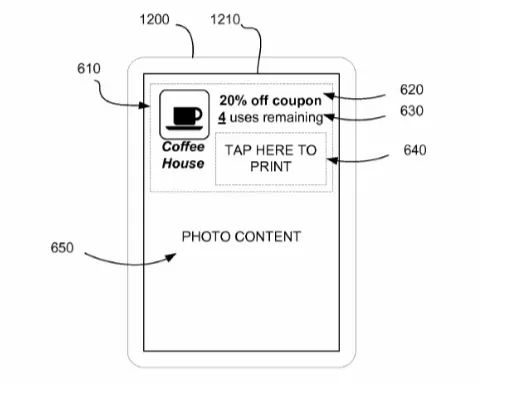
Back in 2015, for example, Snapchat filed a patent for image recognition triggered info cards, which would enable companies to provide information linked to images taken within the app:
“For example, a photograph including an object recognized as a restaurant may result in the user being presented with photo filters that overlay a menu of the restaurant on the photograph. Or a photograph including an object recognized as a food type may result in the user being presented with photo filters that let the user view information e.g., calories, fat content, cost or other information associated with the food type.”
The extension of this included ads which would be triggered by images of chosen objects, providing another potential revenue stream for the company.
The possibilities here are significant, and while we’re not at the next stage of AR adoption and usage as yet, the launch of functional AR glasses is a significant step, which will open up all-new opportunities in this respect.
Redditors will get sick of brands
Reddit is the platform of the moment, due primarily to the prominence of Reddit citations in AI chatbot results.
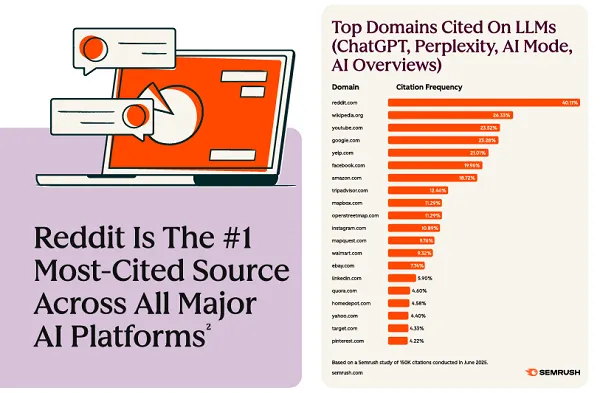
With AI discovery on the rise, it makes sense that marketers are looking for ways to tap into this, and maintain their presence within these rising search surfaces.
Which means that more and more marketers are paying attention to Reddit, either through Reddit ads, or organic placement, making comments that mention their products, or responding to Redditors who pose relevant queries.
That’s going to make Reddit a bigger vector for SEO-like competition, and that influx of marketers is going to impact the value of Reddit discussion. As the infamous industry quote goes: “marketers ruin everything,” and that’s what’s likely to happen to Reddit as well, as Reddit discussions become less and less valuable due to marketers looking to manipulate these listings.
Reddit’s team will need to work to maintain the integrity of their discussions, and Reddit’s upvote and downvote system will play a significant role here as well, ensuring a level of control over such.
But there is a risk that the Reddit experience could be significantly impacted by increased brand interest, which could actually lessen its value in this respect.
AI slop will impact sharing behavior
All the major platforms are super keen to promote their latest generative AI tools, and get people generating random AI images of themselves, or (literally) anything else, as a means to showcase how good their hugely expensive AI systems are getting.
And they are impressive, with AI tools now able to produce images and video that can fool even the most skeptical of viewer. But there are significant downsides to this as well, and in 2026, I expect that the AI backlash will continue to rise, to the point that all platforms will need to provide AI opt-outs, as they work to contain the influx of fake junk.
A major negative side-effect for social platforms is that generative AI images are going to reduce sharing behavior, as unwitting users continue to get duped by AI fakes. When this happens, and they get called out for sharing an AI depiction, that will increase skepticism of future potential shares, and eventually see people posting less, and sharing fewer links with friends, because they don’t know whether it’s actually something that happened or not.
Less sharing means less engagement data, and less time spent in social apps. The platforms need more people spending more time in-stream to maximize their ad revenue, which is why they’ll need to take the AI threat more seriously.
Some platforms have already added options to limit AI results, and you can expect to see more of this, as each app looks to manage the impacts of fake depictions.
The platforms themselves want you to keep using AI, but AI-generated content is the opposite of the value proposition of social apps. Social apps provide a means for everyone to share their unique perspective, and AI content only infects this.
So while the platforms may be keen to push AI depictions, in order to justify their massive spend, AI visuals at least are likely to prompt a bigger backlash from regular users.
Threads will overtake X
“Oh, wow, really going out on a limb with that one, huh?”
Yeah, basic trend data would suggest that Threads is going to overtake X in 2026, with 400 million monthly active users gained in two years, versus X’s reported 600 million that it’s gathered in its entire Twitter/X existence.
Threads has built itself into a viable and valuable platform for many users, and it’s now cementing its role as a key real-time information platform, particularly around sports, with the NBA among several major sporting brands that are now paying more attention to the app.
Add to this the fact that X continues to skirt controversy, which many sports leagues will want to avoid, and you can see why Threads holds appeal, and it seems inevitable that, at some stage in 2026, Threads will overtake X in total active users.
For brands, that presents expanded opportunity, and if you haven’t activated your Threads presence as yet, it’s worth setting up a handle, and learning more about the platform and its potential for your audience.
In 2026, I expect the Threads team to add more analytics and insights to help brands and creators get the most out of the app, and the more it can highlight its value in this respect, the better placed it will be to supersede X as the real-time discussion platform of choice.
We’re already seeing this happen, with more people turning to Threads for the latest when breaking news events happen, and the more that Threads can tap into this, the better placed it will be.
I don’t believe that X is in a strong position to make a comeback, and I don’t think that it’s going to see a major return to its glory days. As such, Threads presents a key opportunity, and I suspect that more data and insight will lead to much more focused Threads strategies in 2026.
Facebook will offer an algorithm opt-out
Algorithms are the bane of social media, and the poison pill that both drive more engagement, and cause more polarization.
There’s no doubt that social platforms benefit from implementing algorithms to boost engagement, as algorithmic systems can detect the most interesting posts, then show them to more users. The problem is, the drivers of interest in this respect are often negative, and that’s what’s exacerbating social divides, while also providing more opportunities for the most outspoken, controversial voices, who can use algorithmic markers to get massive attention online.
All of the academic data points to this, underlining how algorithmic amplification has caused social division. And in 2026, this is going to become more of a focus, which will see regulators seeking to push for algorithm opt-outs, as a means to save people from manipulation and angst.
In response, I expect that more platforms will offer a means to at least try an algorithm-free experience. Maybe that comes in a small-scale test, maybe it’s a bigger push, but I do think that Meta, in particular, is going to be forced to at least try out an algorithm-free Facebook in some regions.
EU regulators are pushing for this, and the results of any testing here could have significant implications, not just for social media use, but for media more broadly.
The past justifications for algorithm sorting are no longer relevant, and people are now digitally literate enough to understand how they can manually edit their feeds. As such, it will be down to the platforms themselves to manage algorithmic sorting, and maybe, through AI-based revisions, there could be algorithmic changes that ease back on polarization either way.
But I do think this will be a key focus, and that could have major implications for how social platforms operate.
New teen apps will emerge
Breaking into the social media space is difficult, because even if you come up with a new function that’s actually popular, Meta’s just going to copy it, then amplify it to a billion users before you even know what it is you have.
Yet, with more regions looking at teen social media bans, and limiting access to younger users, it seems likely that new teen social apps are going to emerge from the wreckage, offering alternative connection to users who’ve been excluded from other apps.
This is one of the key arguments against the latest push for teen social media restrictions, that the established social apps at least offer a level of protection, which other, less mainstream apps may not. And if you force kids out of the main platforms, they’re not going to just go back to riding bikes and playing on rope swings, they’re going to find an alternative, which could be even worse for them.
And while I don’t think that the current teen social media restrictions will ultimately be effective (note: I live in Australia, and I have two teens impacted by the most recent teen social media restrictions, neither of whom have changed their online behavior much as a result), I do think that alternative platforms will arise from these moves, and some of them will stumble upon new sharing and engagement trends that will gain at least some level of traction.
Which, again, will probably just end up being product development for Meta, but either way, it’ll be interesting to see what does end up gaining traction, and how young users look to adjust their behaviors to realign themselves around any such limits.
And maybe, the next TikTok will be in there, hidden amongst these emerging trends.