YouTube has added a new Unique Reach metric for creators, which will provide another way for creators to demonstrate the value of their audience to potential brand partners.
The new measurement is designed to better reflect expanded audience exposure, particularly for CTV viewing, which often has more than one viewer.
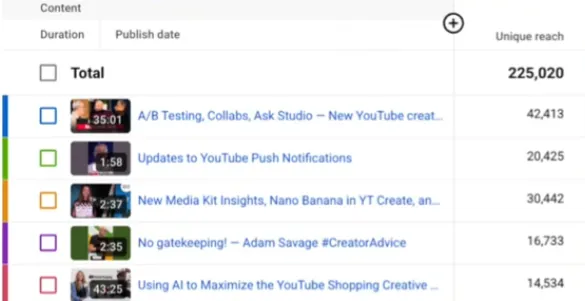
As explained by YouTube’s Creator Liaison Rene Ritchie: “Unique reach is a new metric, and it's different from the existing unique viewers metric. Here's how: Let's say you're watching this video right now on your phone, and you come back to watch it two more times. Analytics will count that as three views, but only one unique viewer. Now, let's say you're watching the same video on your TV. You view it once, but two of your friends are watching it with you at the same time. Analytics will count that as one view, but now three co-views for unique reach.”
So you get three co-views on CTV, versus a single unique view on the app, regardless of how many people are actually viewing.
So how can YouTube provide an accurate count of viewers if it has no way of knowing how many people are watching on a TV set?
YouTube said that it will be using its own models to predict the number of viewers, “based on factors like demographics, video genre, even time of day.”
YouTube said that its model is validated against industry standard measurements from partners, including Nielsen, to ensure that these estimates reflect real-world numbers.
But these are estimates. YouTube has no way of knowing whether it’s one person or 10 people watching on CTV. But YouTube said that this is intended to better align with traditional TV industry standards, so the measurements are more in line with TV predictions, as opposed to absolute logged in user numbers.
In other words, you could be getting less or more accurate viewing data, but it’s more aligned with traditional TV measurement standards.
Is that better, or worse? It’s up to each ad partner to decide, but it’s definitely worth noting when assessing YouTube’s CTV audience stats.
YouTube has also announced that creators can now add music to image posts and carousels in the shorts feed.
YouTube has been gradually rolling out carousel posts within the Shorts feed, which is a similar approach to displaying Instagram carousels in amongst Reels in the main IG feed. YouTubers with access to the option can add up to 10 photos in a single post, and now, they can also add custom audio from the YouTube audio library or Dream Track to accompany these updates.
Another consideration to help build connection with the YouTube community.