As marketers look toward the second half of 2026, marketers need to start locking down their holiday campaign strategies to ensure they’re maximizing key opportunities and reaching their audience where they’re most engaged.
With social media now a significant part of life for more than 20 years, many brands have embedded their approaches to social platform outreach. That means some marketers are relying on traditional strategies that are long past their expiration date.
However, user behaviors are always changing, so it’s worth reassessing traditional guidance notes and considering other platforms and tools that can assist with reach, and boost brand awareness to a more active audience.
To help with this, Social Media Today will be publishing a series of overviews over the next few weeks, offering tips and tactics for building an organic social media presence on the major platforms. These strategies can then act as a foundation for broader social media promotional efforts.
This post examines professional social network LinkedIn, the oldest social media platform, which has had something of a renaissance in recent times.
Here are five key tips on how to build the framework of an effective LinkedIn presence.
1. Examine trending content
Brands can use LinkedIn’s Top Content overview to glean insights into the most engaging content on a broad range of industries.
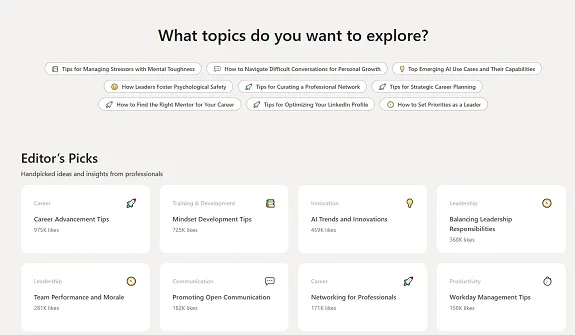
Tapping on these suggested topics will provide an overview of the top LinkedIn feed posts on a given subject. LinkedIn curates these listings across a range of topic and industry categories.
Many users can also access LinkedIn’s conversational AI search tools, which can help uncover relevant content based on popularity and engagement.
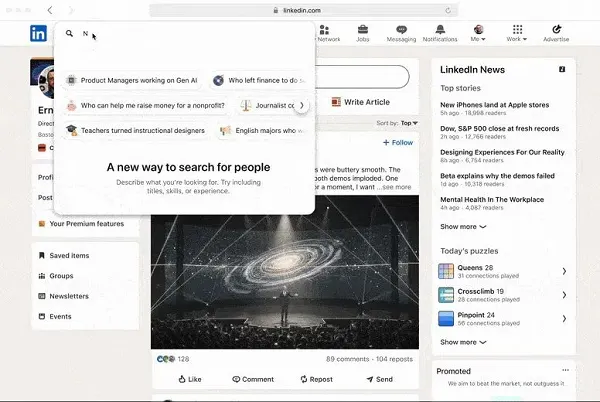
Through this, marketers can pose questions on any topic. These tools can also be used to research key contacts for potential outreach and targeting.
LinkedIn also suggested that creators and marketers should build campaigns around their expertise, rather than only focusing on trends. LinkedIn said that marketers should move beyond mirroring popular content and identify places where they could offer a unique perspective.
2. Understand the best people to reach
A key consideration on LinkedIn is understanding what’s gaining traction with key decision makers. As such, it may also be helpful for brands to build a list of specific individuals they want to reach, based on job roles and regions.
Using this list, marketers see what these users are posting about, and who they’re engaging with, via the activity overview info on respective LinkedIn profiles.
3. Take note of key themes
Based on this research, marketers can build a list of key themes and content approaches that resonate with their niche.
Note the content formats used, such as whether people use questions in their posts, or how they use images and video and what specific pain points generate the most interest.
According to research published earlier this year, carousel and video posts generally perform the best on LinkedIn. That said, it’s important to note specific trends within each target audience.
Understanding the main questions each audience has will also help marketers build a more engaging presence.
4. Take note of trusted or expert voices
Influencer marketing is also important on LinkedIn, although the focus is less about creators and follower counts, and more about those people who have established expertise in their niche.
LinkedIn recently published research that showed buyers are three times more likely to choose a vendor that is highly recommended by customers over one that promises better products or lower prices. As such, influencer marketing is actually highly beneficial, even if it may not seem like an obvious approach on LinkedIn.
Within any initial research process, take note which spokespeople a brand’s target audience are following. In addition, consider whether there may be a way to partner with these users to boost branding efforts.
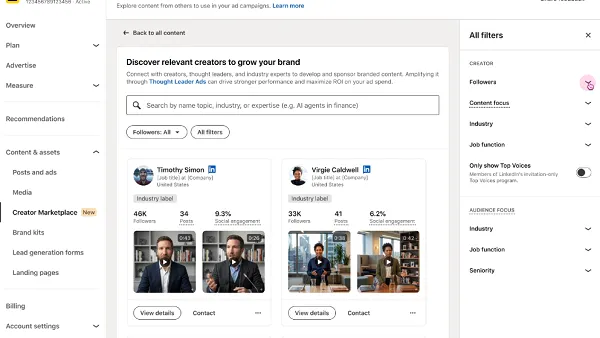
LinkedIn also has its own Creator Marketplace, which lets brands search for top influencers in any industry niche.
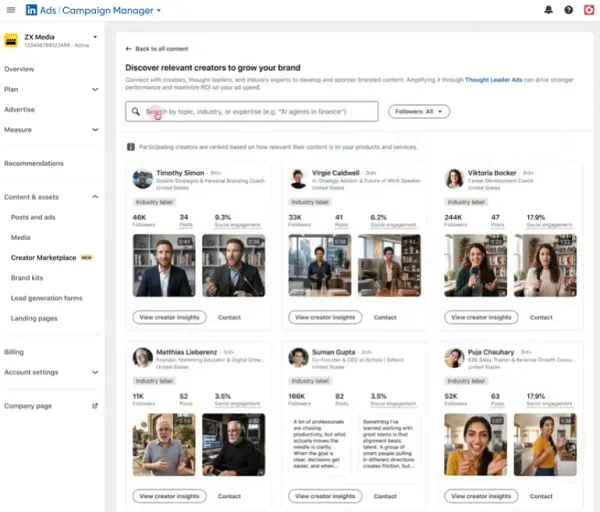
LinkedIn also said that employees, executives, customers, partners and industry experts can all also play a key role in helping to reinforce branding and presence, via tools including Thought Leader Ads.
5. Formulate an approach
Based on all of this data, marketers will then have a solid grounding for their LinkedIn strategies.
Don’t get caught up playing the engagement game and looking to boost like and follower counts with no clear objective. The focus here is making sales, so appealing to the right audience is far more valuable than building a generic presence.
LinkedIn said that marketers should focus on metrics that can be mapped back to business outcomes, such as profile visits, follower growth, leads, event registrations and conversions, rather than reactions and impressions.
LinkedIn also said creators should leverage content formats that create ongoing engagement, including newsletters, articles, recurring video series and events, which can help build ongoing relationships over time. This will be more effective than creating one-off posts.
“The most effective LinkedIn strategies today aren’t built by chasing reach — they’re built by building credibility with the audiences that matter most,” LinkedIn Senior Director of Product Marketing for LinkedIn Ads Gina Kleiner said. “Start by identifying the experts, executives, employees, customers, or creators your audience already trusts. Then, look for ways to amplify those voices and the conversations they’re driving.”
Kleiner added that for marketers looking to scale that approach, tools such as Thought Leader Ads can help extend the reach of authentic content from trusted voices. She also said the platform’s Creator Marketplace makes it easier to discover and partner with credible B2B creators who influence buying decisions.
“Brands can also use BrandLink to align with trusted video content from publishers and creators,” Kleiner said. “In recent months, we’ve also seen growing interest in creator-led experiences, including live events and community-driven conversations that allow brands to engage their audiences in more meaningful ways. The goal isn’t simply to generate more impressions — it’s to create genuine interactions that build trust, influence decisions, and drive measurable business outcomes.