Meta published a new study which looks at how different generations are using its apps, and how marketers can best align their messaging to maximize brand resonance and response.
Meta partnered with BAMM Global for the new report, which incorporated responses from nearly 10,000 people across eight markets. The audience sample covered four generations, from Generation Z to baby boomers, in order to provide a comparison in usage trends across generations.
The idea of the study, Meta said, was to determine the best way to reach audiences with brand promotions in its apps.
As per Meta: “We found a profound convergence in attitudes and behaviors across all age groups, one that demands a fundamental rethink of how brands approach audience strategy.”
Indeed, according to the data, Meta determined that life stage is a far more relevant consideration for brands than age. “Someone going through a key lifestage, whether graduating, getting married or having a baby, shows up to 26 percentage points higher purchase intent than someone who isn't, regardless of their age,” the report said.
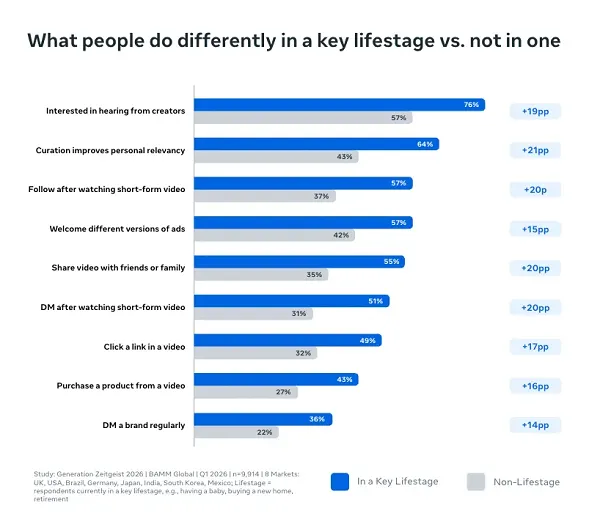
This doesn’t feel like the major revelation Meta seems to think it is. All marketers know the value of reaching people at key life moments. But it’s a relevant consideration nonetheless.
The report looks at emerging engagement behaviors, adding that "digital pebbling," or sharing content with loved ones in DMs, is on the rise.
Why is it called digital pebbling?
“It's the online equivalent of penguins gifting each other stones to strengthen bonds,” Meta said. “We simply call it staying connected.”
The data showed that 90% of people across all generations share photos, videos or memes to stay in touch on Meta's apps, while 80% of people share Reels at least weekly.
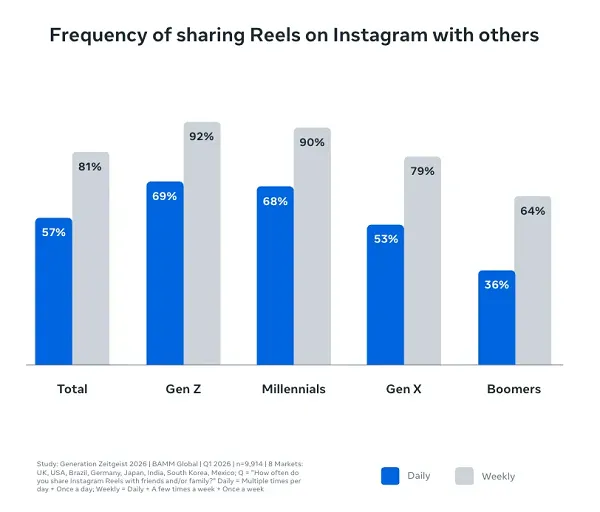
As per Meta: “These small digital gifts — a funny clip here, a useful tutorial there — have become the connective tissue of modern relationships. They say ‘I saw this and thought of you’ without requiring a single word of original composition. Intimacy made effortless.”
Meta said that brands should consider the value of the content they post in order to maximize sharing behavior and drive more resonance.
The simple test here, Meta said, is that brands should consider whether their content is worth forwarding. That could help drive content decisions.
The report also looked at the content that people share, and what inspires users to engage with brand and influencer promotions.
The data showed that consumers are looking for diversity in brand messaging, as opposed to being bombarded with the same promotion. On the creator front, trust based on expertise and experience is a key factor when it comes to accepting product recommendations.
“When we asked people what they value most in creators, expert knowledge came first, with 81% rating it as important,” Meta said. “That’s ahead of humor, relatability, or any measure of fame. Fame, in fact, came last.”
Meta said that consumers trust the opinions of creators who share honest reviews, not just paid promotional messaging. Consumers also respect the opinions of creators who have established knowledge in their respective field of interest.
Meta also shared insight into the types of content users engage with most:
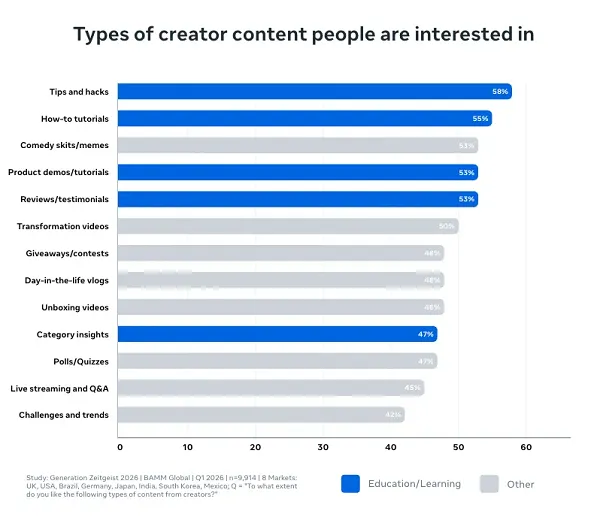
The report also looked at the evolving discovery process, with 85% of Gen Z respondents indicating that they discover products on social media, versus 58% who discover products via search engines. That underlines the value of social apps as awareness tools. The report also looked at the emergence of artificial intelligence chatbots, and the potential of chatbot tools to facilitate deeper connection with shoppers.
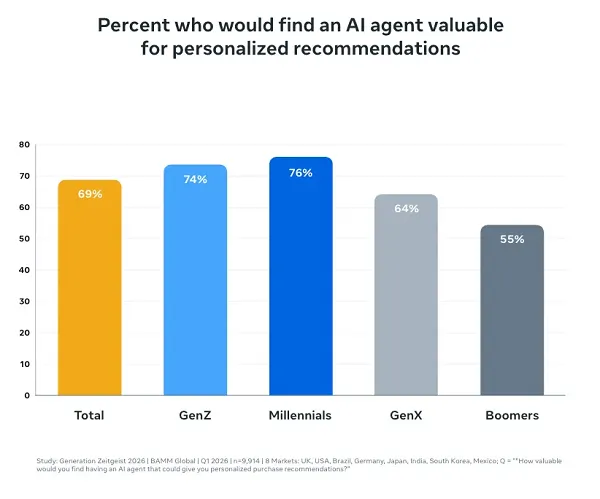
As AI becomes a bigger element of modern life, more consumers are turning to chatbots to find answers quickly. Brands can tap into this by providing chatbots within messaging platforms in order to provide additional guidance at the initial point of inspiration.
These handy notes could help to drive strategic planning.